
A client walked me into her bedroom and stood back. “Something about that corner feels wrong,” she said, pointing at the wardrobe edge jutting straight at the bed. “My shoulders tense near it and I cannot say why.” That is the feeling I hear most about sharp corners, and the tradition has a name for it. The myth says a poison arrow is a curse aimed at you. The reality is gentler and easier to fix than the drama suggests.
The Myth: A Poison Arrow Is Out to Get You
Classical feng shui calls these “poison arrows,” or sha qi, sharp energy aimed at a person. Strip the drama and the idea is practical. A poison
arrow in feng shui is any hard, pointed line aimed at where you sit or sleep, like a wall corner, a beam, or the edge of a piece of furniture. The word “poison” makes people imagine malice in the walls. There is none. The line is just a line. What matters is that your body sits in its path for hours at a time.
The reason the client’s shoulders tensed is not a curse. A wardrobe corner aimed at the bed is a hard point your eye lands on every time you look that way, and over a night your body stays a little braced toward it. You feel it before you can name it. That is the entire mechanism, and it is fixable.
What Sha Qi Actually Means
Sha qi translates roughly to “sharp energy” or “killing energy,” but in daily practice it simply means pressure you can feel. Hard, pointed lines read as pressure to the body, even when you are not looking directly at them. Your space quietly aims a corner at you all night, and your shoulders carry that long after you have stopped noticing the shape.
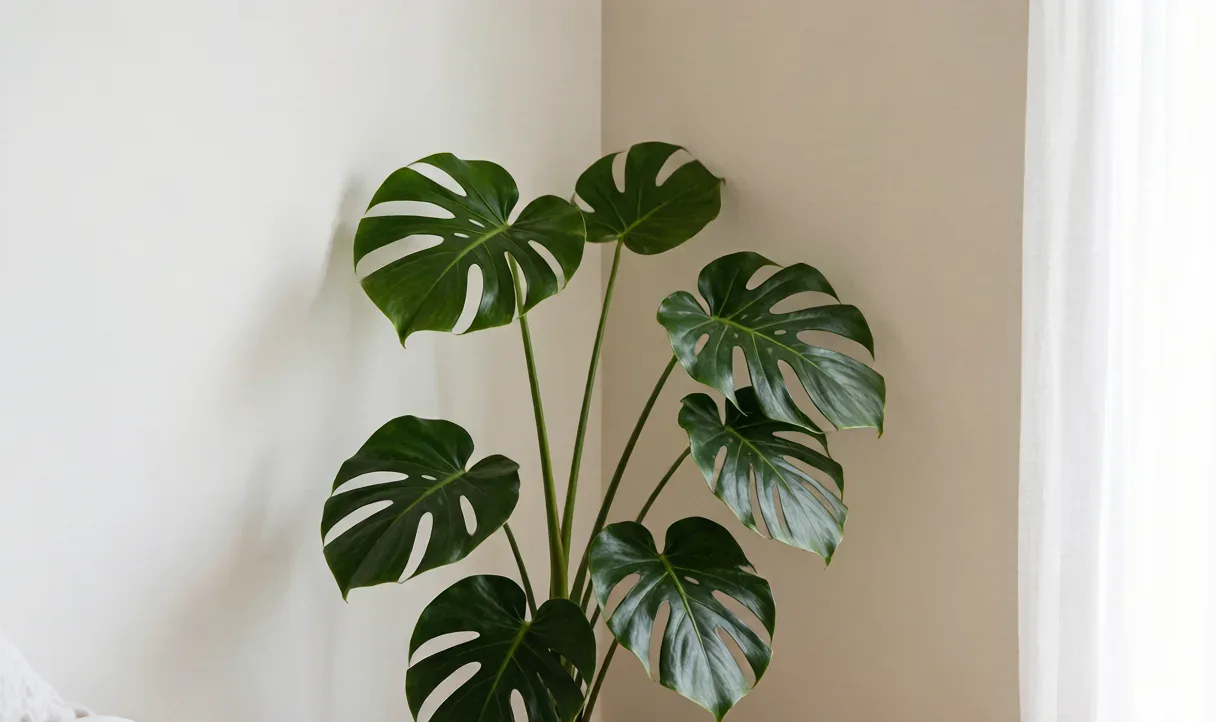
This is why the fix is boring in the best way. You soften the line. A plant in front of the corner breaks the point. A sheer curtain over a beam takes the edge off. Move a cabinet so its corner stops aiming at the bed. You do not need a cure from a shop. You need to round what is stabbing.
A client used a tall ficus to blunt a stair-edge that pointed at her sofa, and the room felt calmer within a week. The plant did two jobs at once: it broke the hard line visually and it added something living and soft where
the hard angle had been. When I cannot move the furniture, a plant is almost always my first suggestion.
The Beam Question
Beams get their own worry because you cannot simply shift them. A beam running over the bed is a long hard line held above you all night. The fix is to break the line you feel, not the structure. Hang a sheer curtain or a light canopy to take the edge off. Paint the beam the same color as the ceiling so it stops reading as a separate, lowered edge. If the bed can move off the beam’s path, move it. The goal is always to break the hard line above you, not to wage war on the building.
Not Every Corner Counts
A corner aimed at a hallway you walk through twice a day is not the same as a corner aimed at the pillow you lie on for eight hours. The lines that matter most are the ones your body sits inside for a long stretch: the bed, the desk chair, the spot on the sofa where you always land. A pointed cabinet edge in a pass-through does little. When I read a room I trace the sightlines from those seats first and ignore the rest.
The same idea reaches outside. A neighbor’s building corner pointing straight at your window, or a road that runs like an arrow at the house, is the outdoor version of sha qi. You soften it the same way from inside: a tall plant on the sill, a curtain, a screen. You are not fighting the city, you are breaking the line your eye meets.
Does This Mean Your Home Is Hostile?
No, and this is the part the scary versions leave out. A few sharp angles do not doom a place. They are a nudge to soften where you can, nothing more. Round the lines near where you sleep and sit, and the room stops quietly pressing on you. I have read apartments with exposed beams and hard corners that felt calm the moment a plant and a curtain went in. The house was never the enemy.
If you want to see how corner and beam work sits inside the bigger picture, my bedroom feng shui guide covers the bed itself, and the whole-home overview lays out the rest of the rooms.
I am the founder of Fengshui Power. I trained under the Zhengyi Dao lineage and practice Yang Gong feng shui, Bazi, and Qi Men Dun Jia for clients across the US and UK. My about page explains my approach, and if you want me to read your rooms, that is what a consultation is for.
Common Questions
What is a poison arrow in feng shui?
It is any hard, pointed line aimed at where you sit or sleep, like a wall corner, a beam, or the edge of a piece of furniture. The tradition calls the sharp energy sha qi.
Are sharp corners actually bad?
They read as pressure to the body, even when you are not looking. Soften them with a plant or curtain and the tense feeling usually eases.
How do I fix a beam over the bed?
Hang a sheer curtain or a light canopy to take the edge off, paint it the ceiling color, or move the bed if you can. The aim is to break the hard line above you.
Does sha qi mean my home is hostile?
No. A few sharp angles are a nudge to soften, not a verdict. Round the lines near your bed and seat, and the pressure lifts.
Can I just ignore a corner I never notice?
If it aims at a seat or bed you use for hours, your body notices even when your mind does not. A plant costs nothing and settles the room.
