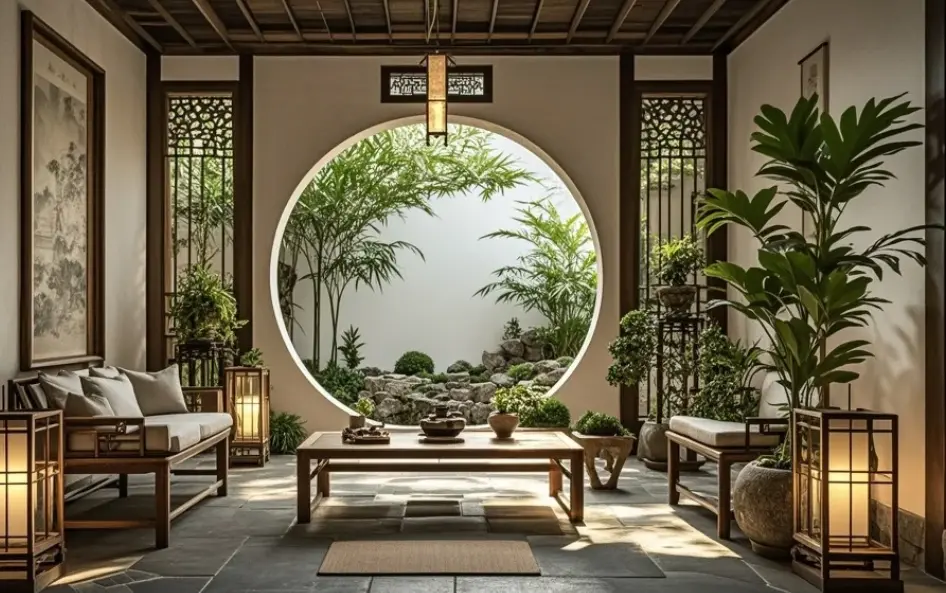

The fastest way to pick feng shui living room colors by direction is to match each wall to the element that rules that compass point. An east room wants Wood-supporting earth tones. South wants Metal whites. West wants Wood greens. North wants Fire warms. Get the element right and the color almost chooses itself.
Most people choose a living room color the way they choose a shirt: whatever catches the eye in the store. Feng shui works the other way around. It starts with where the room sits in the house and what kind of energy already moves through it, then finds the shades that help that energy along instead of fighting it.
I have stood in too many living rooms where the paint was “the color everyone loves on Pinterest” and the family could not say why the space felt restless. The fix was rarely a new sofa. It was the wall. When the color lines up with the room’s direction, the room settles. When it fights the direction, no amount of throw pillows hides it.
Why Direction Beats Your Favorite Swatch
In classical feng shui the living room’s direction comes from the wall holding the largest windows. That is where light and Qi enter, not the front door. Once you know which wall catches the most sun, you know which of the Five Elements owns the room, and the color logic follows from there.
Here is the part most color guides skip. Each direction is ruled by one element, and each element has a “wealth” or supporting element that makes it stronger. You are not painting to please the compass. You are painting to feed the element already living in that corner of the house. The palette below is built on that relationship, which is why the same beige can be perfect in one room and flat in another.
This is also why I tell clients not to copy a friend’s living room verbatim. Their east-facing room and your west-facing room are running on different elements. What lifts one can quietly drain the other.
Feng Shui Living Room Colors by the Four Directions
East-facing living room: warm earth tones
An east room is ruled by Wood. In the Five Elements cycle, Earth is Wood’s supportive element, so earthy, sun-warmed shades feed the room’s prosperity energy rather than competing with it. Think soft yellow, beige, sand, warm cream, and a muted gold. These also sit beautifully against the gentle morning light east rooms get, so the space reads welcoming without feeling heavy.
You do not have to roll paint on every wall. I often have clients bring east-room colors in through cushions, a rug, framed art, or curtain fabric. The element still gets fed, and you keep the freedom to change your mind next year.
South-facing living room: whites and light neutrals
South is Fire territory, and south rooms usually take the hardest sunlight of the day. Because Fire is already dominant, piling on reds and oranges just tips the room into overload. The balance move is Metal, expressed as white, ivory, soft gray, pearl, and the occasional silver-metallic accent. This is not only symbolism. White and ivory surfaces reflect the strong southern light, so the room physically feels cooler and calmer instead of baked.
A south living room done in warm white with gray upholstery stays bright through the afternoon without ever feeling like a spotlight. That is the goal: bright, not blinding.
West-facing living room: greens that soften the sun
The west belongs to Metal, and Wood is its wealth element, which is why green is the workhorse color for west living rooms. Sage, olive, moss, eucalyptus, and soft mint all do the job. There is a practical reason behind the tradition too. West rooms eat the low, golden afternoon sun, and green visually cools that heat, so the room stays comfortable deep into the evening.
This is the one direction where I push clients toward real plants, not just green paint. Living foliage carries the Wood element directly, and it breaks up the strong western light with shifting shadow. A west room with a healthy fiddle-leaf or a row of ferns almost never feels stiff.
North-facing living room: warm Fire accents
North is Water, and it gets the least direct sun, so these rooms can read cool or dim even at noon. Fire is north’s supporting element, which is why warm tones bring the space back to life: burgundy, terracotta, dusty rose, plum, deep coral. Notice I did not say paint every wall red. North rooms look best with warm color used as accent, not as a flood.
Warm lighting does as much work as the paint here. Soft white or amber bulbs take the chill off a north wall and pull the Fire element in without a single brushstroke. Clients are often surprised how much cozier the room feels after swapping a cool LED for a warm one.
The Rule I Won’t Let Clients Follow Blindly
One misconception does real damage: the idea that every direction has exactly one “correct” color and anything else is wrong. I trained in the Zhengyi Dao lineage at Longhu Mountain and have done in-home consultations across the US and UK, and in practice I read the whole home, not a single compass point. The room’s natural light, your existing decor, the layout, and honestly your own taste all sit at the table.
If your heart is set on a color that is not “assigned” to your direction, keep it. Bring it in through artwork, textiles, a single accent wall, or plants. Layered this way, a favorite color becomes a personal note inside a balanced room rather than a clash with the element. The point is not to repaint your life to match a chart. It is to give the room a direction it can grow into.
How to Add Directional Color Without Repainting
You rarely need a renovation to apply any of this. The changes that stick are the small ones you can adjust as the seasons turn.
Swap cushion covers or throws to the tones your direction calls for.
Hang art that carries the recommended palette, even if the subject is abstract.
Place healthy indoor plants wherever Wood energy helps, especially west and east rooms.
Use area rugs, curtains, or a ceramic vase to drop in a subtle accent color.
Change the bulb. Warm light supports Fire-direction rooms; clean neutral light supports Metal-direction ones.
Small moves layered over a few weeks beat one dramatic weekend every time. The room shifts before you notice, and you never committed to a color you might tire of.
When a client asks me where to start, I point them at the one wall with the most light and pick one element to feed. That single change tends to reset how the whole living room feels, and from there the rest of the directions fall into place on their own schedule.
Common Questions
What is the best feng shui color for a living room facing east?
East is ruled by Wood, so warm earth tones feed it best: soft yellow, beige, sand, warm cream, and muted gold. Bring them in through paint or, more flexibly, through cushions, rugs, and art.
Should a south-facing living room be white?
White and other light neutrals (ivory, soft gray, pearl) are the safest choice because south is Fire and already bright. Metal tones reflect the strong sunlight and keep the room calm instead of overheated. You are balancing the element, not banning color.
Can I use green in a west-facing living room?
Yes, and you should. West is Metal, and Wood is its wealth element, so greens from sage to moss soften the intense afternoon sun and make the room comfortable. Live plants do this best because they carry the Wood element directly.
My north living room feels cold. Which colors help?
North is Water and gets little sun, so warm Fire tones bring it to life: burgundy, terracotta, dusty rose, plum, deep coral. Use them as accents rather than full walls, and switch to warm-white bulbs to take the chill off.
Do I have to follow these colors exactly?
No. The direction gives you the element to support, not a rigid rulebook. If your favorite color is not listed for your room, introduce it through textiles, art, or plants so it sits inside a balanced room instead of fighting the direction.
