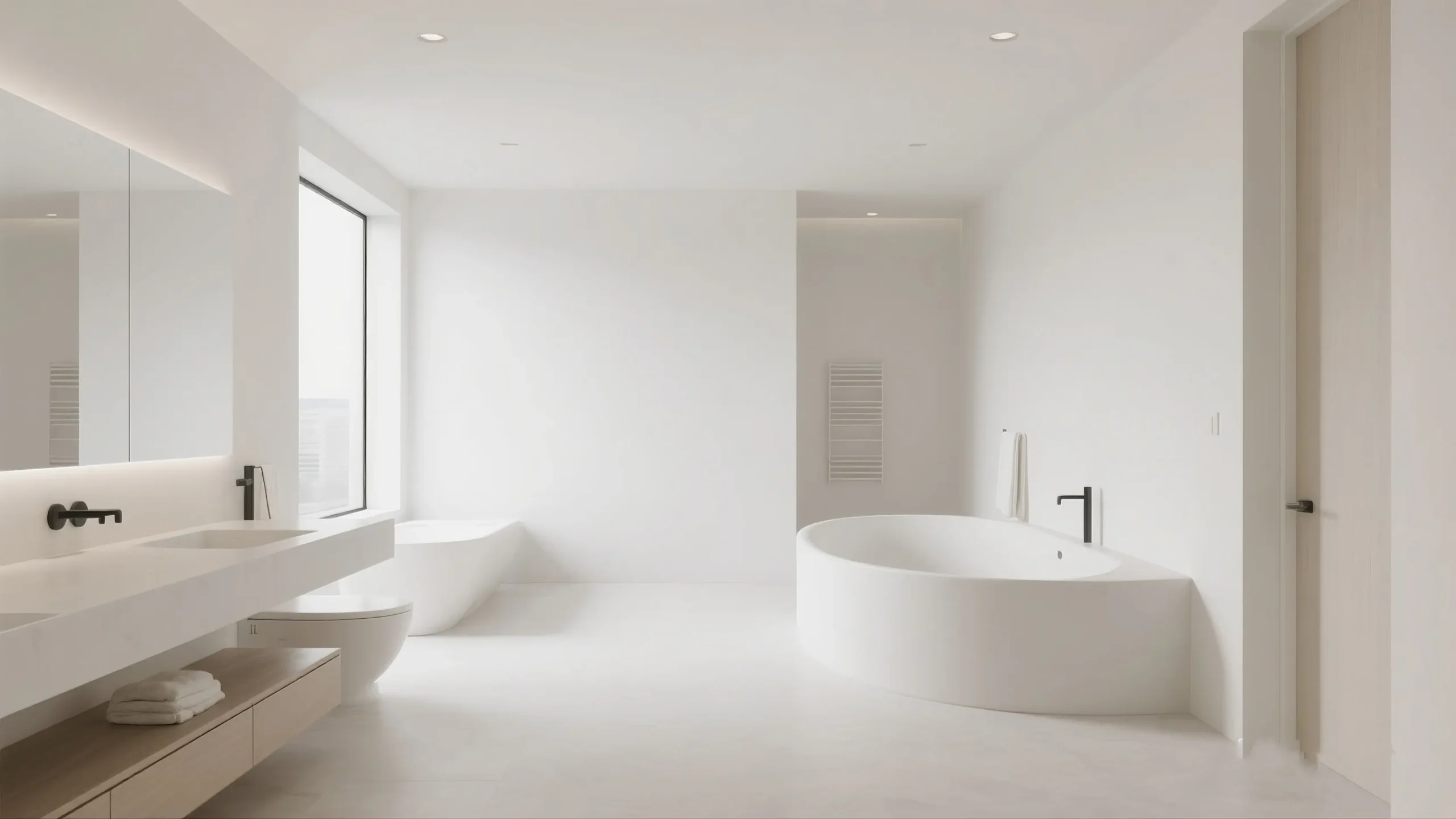

Bathroom Door Feng Shui: 5 Mistakes That Throw Off Your Home’s Energy
A bathroom door aimed straight at the front entrance, the bedroom, the kitchen, the living room, or the stairs is the single layout I get asked about most. The good news is that none of these need a remodel. Close the door, break the direct sightline, and the space settles.
Bathrooms rarely get attention in feng shui conversations, but in traditional practice they matter more than almost any other room because they govern water, drainage, and the release of waste. The issue was never “bad luck.” It’s about how a wet, outgoing room connects to the rest of the house. When its door opens straight onto a key space, the energy that should move through the home gets pulled toward drainage instead of circulating.
I’m the founder of Fengshui Power. I trained under the Zhengyi Dao lineage at Longhu Mountain and I’ve walked clients across the US and UK through exactly these layouts. My about page goes into my background, and if your floor plan is one of the trickier ones, that’s what a consultation is for.
1. The Bathroom Door Faces the Front Entrance
The front door is the mouth of Qi, the point where fresh energy is meant to enter. When the first thing a visitor sees past the threshold is the bathroom, that incoming energy heads straight for a space built around drainage rather than spreading through the home.
You can’t always move a door, especially in a rental. What you can do:
- Keep the bathroom door closed. Always. It’s the cheapest fix and it works.
- Add a slim screen or a curtain just inside the entry to soften the sightline.
- Set a healthy leafy plant by the entryway. Wood energy reads as growth and it visually separates the two spaces.
A client in a narrow Philadelphia row house had the bathroom dead ahead of the front door. We hung a linen curtain, moved a fiddle-leaf fig into the sightline, and two weeks later she said the entry “finally felt like a home and not a hallway to the toilet.” Nothing moved. The room just stopped announcing itself.
2. The Bathroom Door Faces the Bedroom
Bedrooms should feel quiet and protected. A bathroom carries more moisture and movement, so when the two doors line up, the energies compete instead of supporting each other, and the room feels less settled.
This does not mean you’ll lose sleep. It means the layout is one feng shui works to balance. Try these:
- Close both doors at night.
- Run the fan or crack a window so humidity doesn’t drift into the bedroom.
- Use warm, low lighting in the bedroom to anchor a sense of calm.
If you can, shift the bed so it doesn’t sit on the wall shared with the bathroom. A bed against a plumbing wall picks up every sound the bathroom makes, and that alone can keep light sleepers awake long before any “energy” concern enters the picture.
3. The Bathroom Faces the Kitchen
This is the one people notice first. The kitchen is nourishment, family, and the Fire element. The bathroom is Water. When the two doors face each other, classical feng shui reads it as a Water-and-Fire clash, two opposing forces meeting head-on.
In plain terms, what crosses between those rooms is usually steam, smell, and noise drifting into the place you prepare food. You don’t need to knock down a wall. A decorative partition, a sliding screen, or even a tall cabinet between the doors breaks the direct line. Keep both rooms clean, bright, and ventilated so each holds its own character. I cover related door alignments in my front and back door feng shui guide, and the bathroom feng shui basics are worth a read if you want the room-level view.
4. The Bathroom Door Opens Toward the Living Room
The living room is the busiest space in the house, where family gathers and guests are welcomed. When a bathroom door points at it, attention keeps sliding toward a private utility room, and the room’s active energy feels diluted.
Most people don’t catch this right away. A bookshelf, a console table, or a tall plant between the two creates a softer edge and lets energy move through the living room instead of pooling at the bathroom. One thing I’d avoid: don’t hang a mirror to “bounce” the energy back, because if it catches the toilet you’ve just made the sightline worse. A general entryway and front door guide helps if the living room and entry overlap.
5. The Bathroom Door Faces a Staircase
Stairs move Qi between levels. If the bathroom sits opposite them, the damp, heavier energy spreads upward through the house instead of staying contained.
Brighten the staircase and the bathroom doorway. Light reads as active, welcoming energy. A plant near the stairs softens the visual link and adds a natural counterweight. Keep the bathroom door shut here too, since the stairwell pulls air upward on its own and an open bathroom door feeds it directly.
Small Changes, Real Difference
It’s easy to assume a flawed bathroom layout means your whole home has bad feng shui. In reality, almost no home has a perfect floor plan, and feng shui was never about chasing one. It’s about noticing how rooms interact and making adjustments that let energy move the way you want.
Often, keeping the bathroom clean, dry, well lit, and visually set apart from the main living areas is enough to change how the whole space feels. That’s the part worth your attention, not a rulebook. If you want me to read your actual layout, reach out for a consultation and we’ll work through it together.
Common Questions
Can a bathroom door facing the front door be fixed without moving walls?
Yes. Keep the door closed, add a screen or curtain in the sightline, and place a leafy plant near the entrance. None of these require construction.
Is a bathroom near the kitchen really a problem?
It’s a Water-and-Fire clash in classical terms, but it’s easy to soften. A partition or cabinet between the doors, plus good ventilation in both rooms, keeps each space distinct.
Should the bathroom door always stay closed?
In most of these layouts, yes. Closing the door is the single most effective and cheapest adjustment, especially when the bathroom faces a bedroom, the stairs, or the front entrance.
What should I put between a bathroom door and the bedroom?
A closed door on each side first. Beyond that, a tall plant, a bookshelf, or a console table in the gap breaks the direct line and adds a calming buffer.
