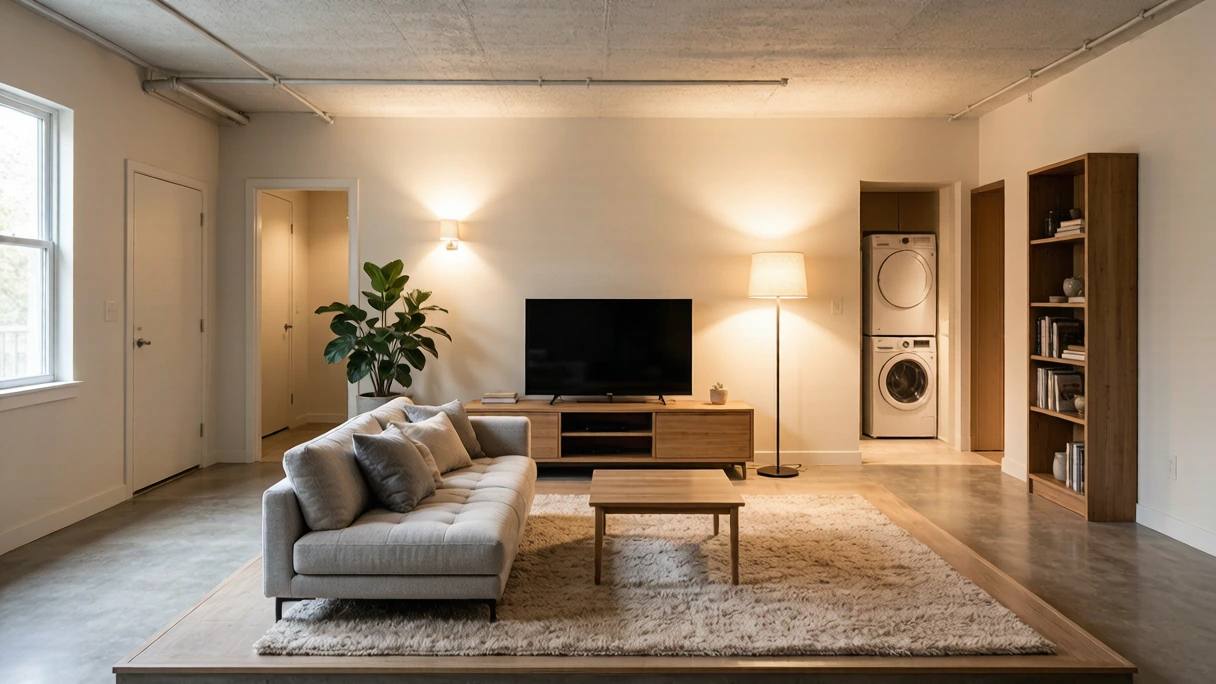

Basement Feng Shui: Working With the Lowest Room
A client in Chengdu opened the basement door and just sighed. “It smells off down there and I don’t go below unless I have to,” she said. The light was a single bare bulb, the corner was damp, and boxes from a move three years ago were still stacked like they’d moved in. That’s most basements, and it’s exactly why they earn their heavy reputation.
Basement feng shui is about not letting the lowest room go forgotten. Deal with dampness and dark first, then actually use the space, and a basement stops dragging the house down and starts pulling its weight.
Why basements feel heavy (and why that isn’t superstition)
Most basements share three conditions: dark, damp, and forgotten. The body reads all three as stuck, and that isn’t mysticism, it’s sensory. Darkness tells your nervous system the space isn’t safe to linger in. Dampness carries a smell your brain links to rot and neglect. Forgotten means the air never moves. Put those together and “heavy energy” is just the honest word for how the room makes you feel.
In the Five Elements system the basement sits close to the Water zone, and still, stale water is exactly the problem we’re trying to fix. So the whole job below ground is movement. Move the air, move the light, move yourself through it. A basement you walk past and never enter is a basement the house has quietly given up on.
Here is the quick version of what drags a basement down versus what lifts it:
| Drags the energy down | Lifts the energy up |
|---|---|
| Musty, damp air and mold | A dehumidifier running and the leak fixed |
| One bare bulb on a cord | Layered warm light plus a daylight bulb |
| Boxes blocking the stairs | A clear, lit stairwell you actually use |
| An empty finished room | A real function: gym, office, movie space |
| Tall furniture fighting the ceiling | Low, horizontal pieces that follow the height |
Fix 1: Kill the dampness before anything else
This is the one place where the old feng shui advice and basic health fully agree, and they agree because mold and mildew really do change how a house feels and smells. Fix the leak, run a dehumidifier, treat the air. You can hang a hundred cures and the room will still feel wrong until you do this part.
Clients often ask me to start with a fountain or a crystal. I tell them to fix the smell first. Feng shui cannot out-decorate a musty room. The single most effective cure for a basement is a dehumidifier, not a symbol. Once the air smells clean, everything else you do actually lands.
Fix 2: Layer the light, don’t hang one bulb
Basements starve for light, and darkness reads as stuck energy for a reason. One bulb on a cord makes the room feel like a utility closet. Layered lighting changes it fast. Warm fixtures, a lamp in the corner, even a full-spectrum bulb to fake daylight near a seating area.
If you’ve got a mirror, set it where it bounces light down the stairwell. It pulls brightness into the lower level and looks fine doing it. Just angle it to spread light, not to throw glare back at the top of the stairs. Warm paint on the walls helps too. Cool grey concrete reads as a cellar; a warm clay or sand tone makes the same room feel like a room.
Fix 3: Use the room, don’t store-and-forget it
A finished basement left empty collects stale air and a stale mood. I’d rather see you actually sit down there, gym, office, movie room, whatever, because a space you use stays aired and alive. Even twenty minutes a day, a workout or a phone call in that corner, changes how the whole level feels. Use keeps the damp and gloom away better than any object you could buy.
Fix 4: Keep the stairs clear and lit
The stairwell is the channel between floors. If boxes block it, the connection between the living space above and the room below feels cut. A clear, lit staircase does more for the basement than anything you could buy. Sweep it, light it, and walk it daily so the path stays open.
Fix 5: Tame low ceilings without fighting them
Low ceilings are common down there. If it feels oppressive, keep furniture low and horizontal so the eye doesn’t fight the height. The basement doesn’t need to be bright and cheerful. It just needs to be remembered and used.
Do you need to worry about a basement?
No. A basement isn’t a flaw in the house, it’s the part owners most often ignore. Give it light, dry air, a purpose, and a clear path, and it stops pulling the home down and starts supporting it. The goal was never a perfect room. It was a room you actually go into.
I’m the founder of Fengshui Power, trained under the Zhengyi Dao lineage at Longhu Mountain, and I’ve rehabbed lower levels for clients across the US and UK. My about page explains my approach, and if you want me to read your lower level, that’s what a consultation is for.
Common Questions
Why do basements feel like they have heavy energy?
Most are dark, damp, and forgotten, and the body reads all three as stuck. Fix the dampness, add layered light, and actually use the space, and the heavy feel lifts.
How do I improve feng shui in a damp basement?
Fix the leak and run a dehumidifier before anything else. No cure works until the mold and mildew are gone and the air smells clean.
Should a basement be empty or used?
Used. A finished basement left empty collects stale air and mood. Put a gym, office, or movie room down there so the space stays aired and alive.
What about low basement ceilings?
Keep furniture low and horizontal so the eye doesn’t fight the height. The basement doesn’t need to be cheerful, it just needs to be remembered and used.
Can a basement have good feng shui?
Yes. Dry air, layered light, a real function, and a clear stairwell turn the lowest room from a drag into support for the whole house.
