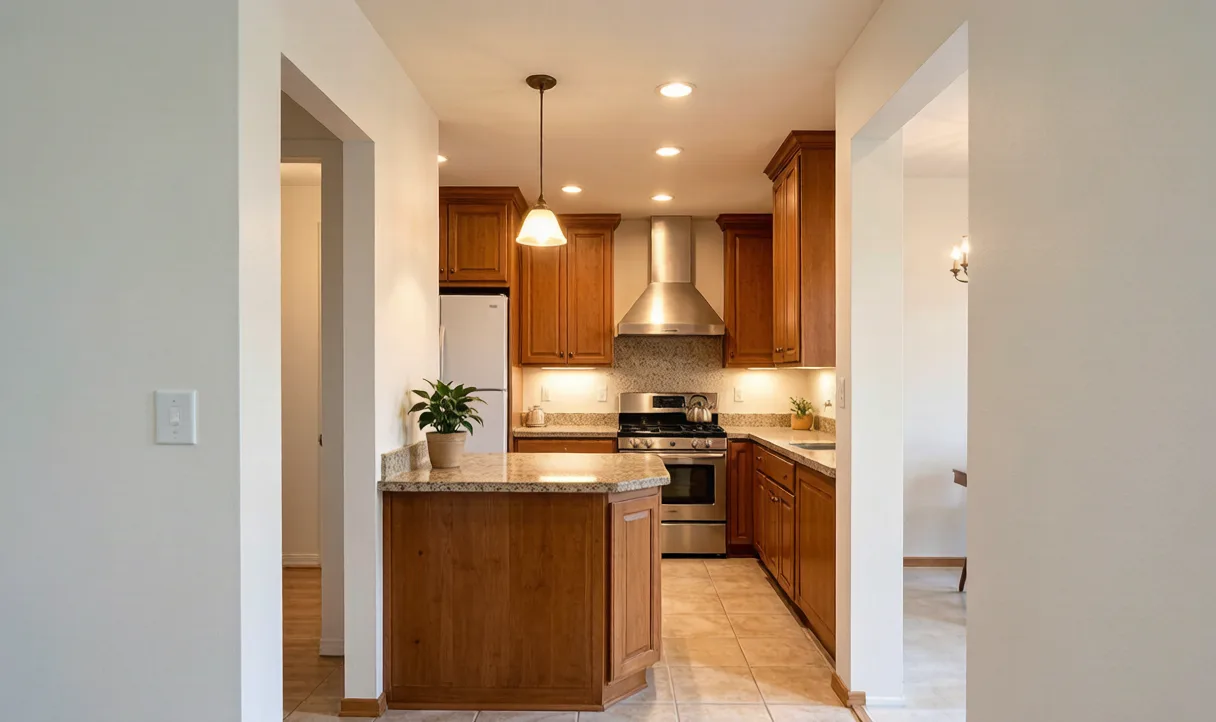

Stove or Kitchen Visible From the Front Door: What It Means and How to Soften It
Walk into a small apartment and the first thing you see is the stove. For a lot of people that feels wrong, and they can’t say why. A client told me this exact thing last winter, and she was renting, so drilling was off the table. That actually made the fix easier, because everything good here comes down without a trace. Kitchen visible from the front door, or a stove sitting in line with it, is just the layout where the busiest, messiest corner of the home becomes the first impression. The short version: this is a comfort problem more than anything else, and almost every fix is reversible.
A curtain, a plant, or a screen stops the stove from being the greeting, and none of it needs a permit. But before you hang anything, it helps to know what you’re actually dealing with. Some homes barely have a problem, and others have one worth ten minutes of your time.
Why a kitchen at the entry reads as off
The entry is supposed to arrive, pause, and settle. A visible kitchen skips the pause. The eye jumps from the door straight to the work of feeding the house, so the home feels less like a place you land and more like a job site you walked into. An open kitchen at the entry means cooking smells, the day’s mess, and the loudest corner of the home are what a guest meets first, and you feel that the moment you walk in.
The older way of saying it goes like this. The stove is Fire, and in many schools it’s where the household’s resources get “cooked.” The entry is the mouth of the house, where energy and guests arrive. Fire rushing straight out the door reads as resources leaving before they settle. Strip the poetry and it’s still sensible. A home that greets you with the stove instead of a place to land feels tense, and tension is most of what people mean by bad energy. I’ve watched renters relax the moment the stove stops being the first thing in view.
Step one: read the actual sightline
Stand at your front door and look. Is the stove fully in view from the threshold, or does a peninsula, a half wall, or just the angle of the room already break the line? Distance and angle decide how much you need to do. If the burner is dead center in your first glance, the fix works harder. If it’s only partly visible, a small shift in furniture may be enough.
Also notice whether the stove faces you or sits sideways. A sideways stove reads far less intrusive than one pointed straight at the door. That single observation can change the whole job from “build a wall” to “nudge the eye,” and most apartments land somewhere in between.
The fixes, and which ones actually matter
Hang a tension-rod curtain or a beaded strand across the kitchen opening. That softens the sightline without a single screw, and if you pick a fabric that matches the room it reads as decor, not a cover-up. This is the fastest win for renters, and it comes down in minutes when you leave.
Set a tall plant or a slim shelf near the door. Either one pulls the eye to the side and away from the burner. A tall, leafy plant does double duty: it breaks the view and adds living Wood, which balances the kitchen’s Fire. If your entry is dim, choose something that tolerates low light, and keep it healthy. A dying plant at the threshold makes a worse first impression than no plant at all.
Keep the stove and the counters clear. This one matters more than people expect. Because the stove stands for resources in so many traditions, a greasy, cluttered one in view reads worse than a plain, tidy one. Wipe the cooktop, put away the dishes, and the kitchen starts to look intentional instead of exposed. A visible stove that’s cared for feels like a home running well. A visible stove with last night’s pan on it feels like the door opened onto the back of house.
Lay a warm rug between the door and the kitchen. A rug tells the path to slow down and gives the entry a “land here” feeling before the eye reaches the cooking zone. Color and texture do the work, no hardware required, and it also absorbs sound if your entry is hard-surfaced and echoey.
Light the entry, not the kitchen. A warm pendant or a small lamp by the door draws the eye to the arrival point and away from the stove, so the home greets people before the cooking zone does. A dim, shadowed entry makes the stove loom. Warm light near the door pulls focus back where you want it. You’re shaping the first three seconds, and light is the cheapest lever you have.
If you own the place, you can go further. A half wall, a pocket door, or a sliding panel between the entry and the kitchen breaks the sightline for good. In a full remodel, moving the stove off the direct door axis is the cleanest fix of all, though it’s the most expensive, and most renters never need it. The aim is a reason to pause at the door, not a construction project.
The stove’s own position, and the open-plan case
One thing most people miss: the stove’s command position matters too. Ideally you can see the door while you cook, so you’re not turned away from whoever enters. That single placement calms more open kitchens than any curtain, because the person cooking stays connected to the room instead of facing the wall.
The modern version of this layout is the open-plan kitchen with an island facing the door. Same concern, larger room. The same fixes apply: a tall plant at the island’s end, a pendant light that draws the eye upward instead of down to the cooktop, and a habit of clearing the island before guests arrive. The feel of the home matters more than the layout label, and the broader kitchen feng shui rules go deeper on stove placement if you want them.
Do you actually need to fix this?
Not really, and I’d rather be straight about that. Treat it as a nudge, not a verdict. If the place feels good to live in, a stove in view is a detail you can soften in ten minutes. A home should say “come in,” not “dinner’s almost ready” the second you arrive.
One honest caveat: if the kitchen is also dirty or chaotic, no curtain will help. The sightline is a small lever. The bigger one is simply keeping the space you cook in cared for, which is true whether or not anyone can see it from the door. I’m the founder of FengShuiPower. Most of my consults are online now, and I read floor plans and BaZi charts for clients around the world, so this particular question comes up more than you’d think.
Common Questions
Is a kitchen visible from the front door bad?
Not as a hard flaw. It’s a comfort issue. The cooking zone becomes the first thing a guest sees, which can make the whole home feel busy the moment you walk in. Reversible fixes solve it without remodeling, and a clean stove already softens the concern.
How do I hide the kitchen from the entry when I’m renting?
When you rent, the move is temporary and quiet. Hang something soft across the kitchen doorway, set a plant by the entrance, and keep the stove wiped. None of it needs a drill, and all of it comes down when you hand back the keys. A folding screen angled just inside the door works the same way and looks like it was always meant to be there.
Does an open kitchen have bad feng shui?
Only when it throws the busiest corner at guests the second they arrive. A plant or a warm light near the door pulls the eye away from the cooktop, and the worry usually disappears. Whether the kitchen is open or closed matters far less than how the entry actually feels.
Should the stove face the door?
Best to avoid. A stove you see the moment you open the door reads as work before welcome. Put a screen or a plant so the eye settles before it reaches the kitchen, and angle counts: a stove set sideways reads nothing like one aimed straight at the entrance.
Does a clean stove really make a difference?
It’s the cheapest fix here. In many schools the stove stands for the household’s resources, so a stove left greasy and piled with dishes reads as careless in a way a clean one never does. Two minutes of wiping beats any curtain.
What if my entry and kitchen are the same small room?
Use the rug and the light to mark a “landing” zone at the door, keep the stove spotless, and add a screen or curtain at the cooking end. The goal is a visual pause, which you can build even inside one open room. A warm lamp by the door does most of the work.
