
A client in Guilin texted me a photo of a fountain dripping onto her hall floor. “I bought it for wealth and now I just mop,” she wrote. The shops frame water as a shortcut to abundance. The reality is more grounded, and a leaking fountain does the opposite of what she paid for.
Water is the wealth element, so an indoor water feature sounds like an easy win. The honest answer: a small, clean fountain or fish tank can soften a dead corner with gentle sound and life, but only if you maintain it and place it with intent. A dusty, buzzing pump helps no one. The choice most people actually face is not “water or not,” but which kind of water fits the room and the person keeping it.
The Choice: Real Water, Living Water, or Symbolic
You have three ways to bring the Water element indoors. Each behaves differently, and the right one depends on how much upkeep you’ll realistically give it.
Real, moving water is a fountain or table spout. It adds the sound of flow and a sense of life to a forgotten corner.
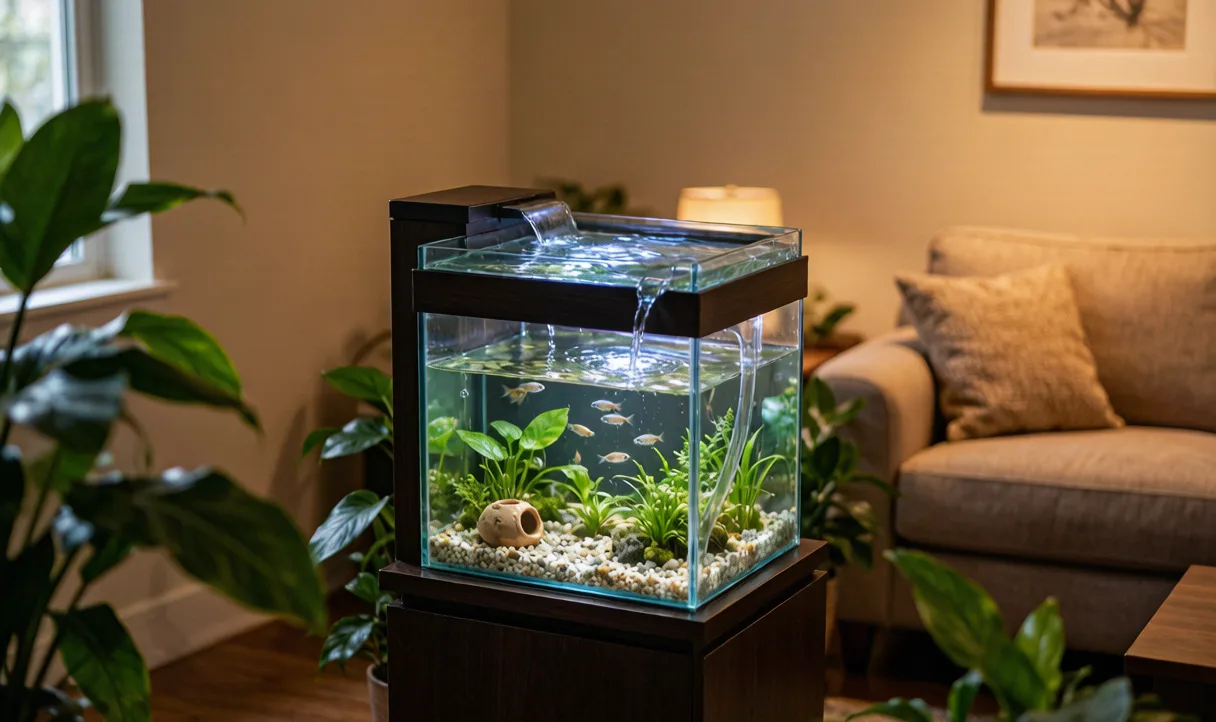
Living water is a fish tank. It does what a fountain does, plus the moving life of the fish, which many clients find the most soothing version.
Symbolic water is a mirror, a piece of blue or black art, or a photo of a calm lake. No pump, no fish, no mop. For renters and busy people this is often the smarter pick.
Fountain vs Fish Tank
| Fountain | Fish tank | |
|---|---|---|
| Upkeep | Low, but the pump must stay clean | Higher, daily feeding and filter care |
| Sound | Gentle trickle, or a hum if cheap | Mostly silent unless the filter buzzes |
| Risk | Leaks, algae, hard-water marks | Fish death, algae, more cleaning |
| Best for | A quiet corner you’ll dust weekly | Someone who wants living motion |
| Worst case | A dripping chore | A neglected tank that reads as stuck energy |
I place real water in the east or southeast of a home, the Wood areas, where water feeds growth under the generating cycle. The logic is elemental, not lucky. A fountain in the north, the Water gua, also sits naturally, but only if the room stays dry and the pump stays quiet.
Symbolic Water for Renters
If you rent, or you know you won’t keep a pump alive, use symbolic water. A round mirror in a dim hall bounces light and reads as reflective Water. A framed photograph of still water on the east wall carries the same calming signal without a single drop to maintain. Blue and black accents in a cold corner do the same quiet work. The benefit is the same: a softened, flowing feel in a corner that felt dead, with none of the chores.
A client who couldn’t keep a plant alive swapped a leaking fountain for a large mirror and a blue abstract print in the southeast. She texted later that the corner finally felt finished. No mop involved.
Where It Goes and Where It Doesn’t
A living room corner or a home office shelf works in most homes. Avoid the bedroom, where movement fights sleep, and don’t point a fountain at the front door, where flowing water aimed outward reads as resources leaving. The bathroom already runs heavy Water, so don’t double it with a fountain in there. Water helps when it’s cared for and placed with intent. A feature should calm the room, not become its chore.
If you want wealth symbolism, place water where you’ll see it and smile, not where it becomes a task you resent. A tiny table fountain in a quiet corner does more than a floor unit you’ll dread cleaning. Size matters more than price.
My Recommendation
Test the sound before you buy. A fountain that gurgles or hisses will annoy you within a week, while a soft, even trickle is the only one worth keeping. I tell clients to listen to a video of the exact model first, because pump quality, not price, decides the noise. Shape matters too: round or organic bowls read better than square basins, since a square pool of still water can feel like a stagnant pond.
Start with the smallest version of water you’ll actually maintain. For most people that’s a quiet table fountain or, better, symbolic water they’ll never have to service. Move to a fish tank only if you genuinely like fish and will feed them. A neglected tank reads as stuck energy, the exact opposite of the goal, so only add one if you’ll care for it.
I’m the founder of Fengshui Power, trained in the Zhengyi Dao lineage and the Yang Gong school. I serve clients remotely, from anywhere, through online BaZi readings and feng shui consultations done from your birth date and floor plan. More about my background. When you want the personal read, a consultation is how we begin.
Common Questions
Is an indoor water feature good feng shui?
Yes, when small, clean, and placed with care. A maintained fountain softens a dead corner. A leaking or neglected one does the opposite, so upkeep decides whether it helps.
Where should I put a fountain in my home?
A living room corner or home office shelf works best, ideally the east or southeast. Keep it out of the bedroom and don’t aim it at the front door, where flowing water outward reads as resources leaving.
Do fish tanks count as water features?
They do, and they add living motion that many people find soothing. They also need real upkeep; a forgotten tank reads as stuck energy, so only add one if you’ll care for it.
Can a water feature bring wealth?
It won’t print money. At best it adds calm flow to a corner you’ve cared for. The wealth comes from maintenance and intent, not the water itself. Symbolic water gives the same signal with no chores.
What is symbolic water for renters?
A mirror, a blue or black artwork, or a photo of calm water. It carries the Water element’s calming signal without a pump or fish, which suits rentals and busy homes.
