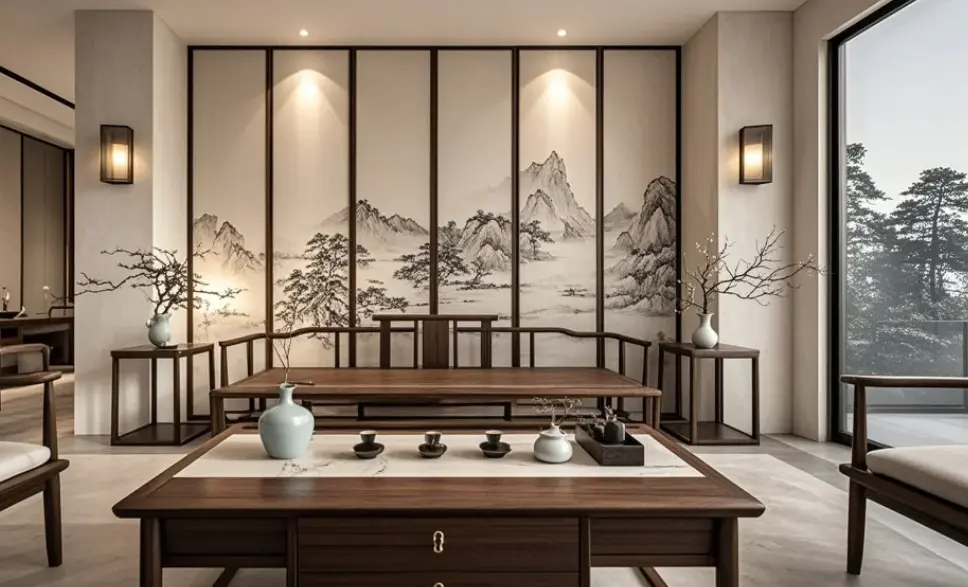

If you rent an apartment, condo, or townhouse, there is a fair chance your front door opens at the end of a shared hallway. It is one of the most common layouts in modern buildings, and it is also one of the most asked-about situations in my practice. People hear that a hallway aimed at the door is “bad feng shui” and assume the home is somehow cursed. It is not. What classical feng shui is describing is a flow problem, and flow problems have practical fixes.
The short answer: a long, straight corridor pushing energy toward your entrance is not a disaster. It is a layout that benefits from a few deliberate touches near the entry. You do not need to move, renovate, or fear the space.
Why a hallway aimed at the door gets attention
In classical feng shui the front door is called the “mouth of qi.” Think of it as the point where outside energy enters before it spreads into the rooms behind it. A short, open foyer lets that energy wander in and settle. A long, narrow corridor does something different. It acts like a channel that carries energy straight to the door at speed.
Traditional texts name this kind of fast, direct line “sha qi,” often translated as piercing or harsh energy. The concern is not the hallway as a physical object. It is the feeling of a strong, unbroken sightline that rushes the eye and the body from one end to the other. Many homeowners tell me the same thing in plain language: the entry feels like a wind tunnel, not a welcome.
That description comes from feng shui tradition, not from a laboratory. I treat it as a design philosophy about how a space feels to live in, not as a prediction of doom. When you soften the corridor, people usually say the entry feels warmer and more like theirs. That is the real payoff.
Do not confuse a hallway entry with a home where the front and back doors line up. When those two doors sit on a straight line, energy is said to pass through the entire floor plan, which is a separate concern with its own remedy. A hallway entry is narrower in scope: the rush happens at the threshold, not across the whole home. If both describe your place, the entry screen still helps, and the front and back door alignment layout is worth a look.
The “black butterfly house” you may have heard about
Here is a related layout that comes up a lot once people start reading about corridors. If a hallway runs straight through the center of a home and splits the floor plan into two halves, some traditional schools call it the “black butterfly house.” The name comes from the shape: the central corridor looks like a body, and the two sides look like wings.
The issue traditional practitioners raise is not the hallway itself. It is that energy can travel from one end of the home to the other without ever gathering in the rooms where people actually spend time. The symbolic reading links that to weaker family connection or more friction at home. I would put it more simply: a home divided straight down the middle can feel emotionally split, and small changes that pull people toward the center help.
Whether your layout is a simple entry corridor or a full center hallway, the fixes below work on the same principle. Slow the line, break the sightline, and give energy a reason to spread.
How to fix front door facing a long hallway feng shui
You do not need to wall off the corridor. The aim is to slow and spread energy so it circulates instead of rushing in. Here are the changes I recommend most often, in order of how much difference they make.
A folding screen just inside the door. This is the oldest remedy for a hallway-facing entrance, and it still works. Set a decorative screen a few feet inside the door so it gently redirects the sightline. It also gives the entry a sense of being a destination rather than the dead end of a corridor. For renters, a freestanding screen leaves no mark on the walls.
A console table or slim cabinet. If there is no room for a screen, a narrow table or open shelf near the door creates a visual transition between the hallway and your living space. That small stop point encourages energy to spread sideways instead of shooting straight through.
Large leafy plants. Tall, healthy plants are a frequent recommendation because they soften a long, sharp sightline while bringing in the Wood element. In the Five Elements system, Wood supports steady, upward growth and helps moderate fast-moving energy. Place them where they break the corridor view without blocking the walkway.
Better lighting. A bright, welcoming hallway reads as far more balanced than a dark, narrow one. Add a warm light near the entrance and keep the corridor clear of dumped coats and boxes. Light changes how the space feels faster than almost anything else.
Thoughtful mirrors. Mirrors can open up a tight entry, but do not place one where it reflects the front door directly. A mirror that bounces the door back is a classic mistake. Angle it to widen a side wall instead.
None of these changes asks you to alter the building. They change how the corridor reads as you walk up to it, which is the part you feel every single day.
Renter-friendly fixes that leave no trace
Because so many hallway entries are in rented apartments, I want to be specific about what you can do without breaking a lease. A tension-rod curtain across the corridor mouth, a tall plant on a stand you already own, or a freestanding bookshelf all break the sightline. A runner rug in a warm tone down the hall slows the eye and marks the path as yours. None of these require permission or a drill.
If the layout is the center hallway “black butterfly” type, the same ideas apply with one addition: create a reason to gather in the middle. A breakfast nook, a reading corner, or even a comfortable chair and lamp near the central junction pulls energy and people toward the home’s core.
When the entry still feels off
A hallway is rarely the whole story. If the door itself is cramped, cluttered, or poorly lit, fixing the corridor alone will not fully shift the feel. Pair these changes with a clear, welcoming entryway and the difference is noticeable. For a personalized read on your own floor plan, a consultation looks at the actual layout, not a generic rule.
Common Questions
Is a front door facing a hallway really bad luck?
No. Classical feng shui describes it as a flow issue with a practical fix, not a sign the home is doomed. The long sightline carries energy quickly to the door, which can make an entry feel rushed. Simple fixes like a screen, plants, or better lighting usually resolve the feeling.
What is sha qi in a corridor?
Sha qi means harsh or piercing energy. In a hallway context it refers to a long, straight, fast line of movement aimed at the entrance. The traditional fix is to slow and redirect that line rather than block it completely.
What is a black butterfly house in feng shui?
It is a layout where a hallway runs through the center of the home and splits it into two halves, like a butterfly’s wings. Traditional schools associate it with a divided feeling at home. Softening the central line and adding gathering spaces in the middle helps.
Can renters fix a hallway-facing front door?
Yes. Freestanding screens, tall plants, tension-rod curtains, and runner rugs all break the sightline without permanent changes. These are the same principles applied with lease-safe objects.
Should a mirror face the front door in a hallway?
It is better to avoid a mirror that reflects the door directly, since that is considered a classic entry mistake. Angle the mirror to widen a side wall instead, which opens the space without bouncing energy back out.
