
A client showed me her leased apartment, a narrow one-bedder with a door that swung almost onto the mattress. “I can’t drill, I can’t repaint, and my landlord checks the walls,” she said. “Is any of this even for me?” Most feng shui writing assumes you own the place, so her question is fair. The answer is yes, easily, because renter feng shui is about attention, not renovation.
What I Found in That Apartment
The room was not broken. It was forgotten. The door swung onto the bed, so the first thing the space did each morning was crowd her. The surfaces held a month of mail. One sad pothos sat in the corner, bone dry. The bedroom light was a ceiling bulb left on full, and the living area was
dim. None of that needed a permit. All of it was reversible in an afternoon.
The mistake most renters make is waiting for ownership before they touch the feel of a place. You can shift how a leased space reads with order, light, and living things, and none of it touches your deposit.
What We Changed
We started at the door, because the front door is usually the one spot a renter can touch without asking. A clean mat, one healthy plant, nothing broken on the threshold. Energy reads the doorway first, and a cared-for entry changes the whole walk-in.
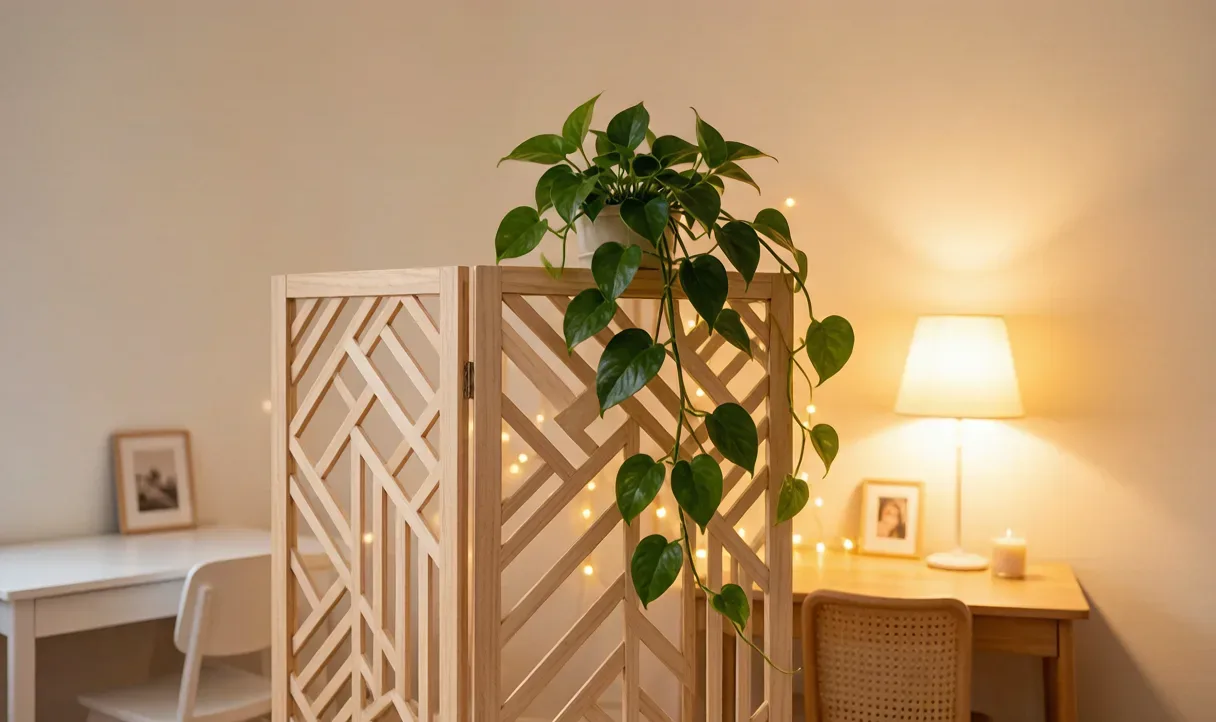
For the bed, we angled a low chair toward the entry so part of the room “saw” the door, then folded a screen between the bed and the swing. The commanding position is the obvious casualty in a rental, and everyone wants the bed set so you see the door without sitting in its line. In a box room with one window and the door swinging onto the mattress, perfect placement is often impossible. So you adapt with things that leave when you do.
Then we cleared the floor and surfaces. Stale energy is just clutter you trip over and never see. We lit the living area bright and the bedroom dim, because lamps cost nothing and leave no mark. We binned the dead plant and bought a fresh pothos for Wood energy and plain life. A dead plant does the opposite, so it went straight in the trash. Last, we covered the mirror that faced the bed at night, free and reversible.
The Principle Behind It
The useful core of feng shui for renters is reversible attention. Every move should pass one test: can I undo it in an afternoon and hand the place back untouched? If yes, it is fair game. If it needs a drill, paint, or the landlord’s sign-off, it is not yours to make yet.
That constraint is a gift, not a limit. It forces you onto the things that actually change how a room feels: what you clear, what you light, what you keep alive. Those beat a built-in altar every time.
Three Takeaways for Any Rental
First, own the doorway. It is the one edge most leases let you tend, and a clean, planted, unbroken threshold resets the whole apartment before you step in.
Second, fake the walls you cannot build. Screens, tall plants, open shelving, and rugs define zones and give the bed a sense of backing without a single screw. In a studio, a screen across the foot of the bed turns one open box into a bedroom and a living area.
Third, keep something living. A pothos or peace lily asks little and returns a lot. A dead one sends the opposite message, so the rule is simple: one thriving plant beats three neglected ones.
Light Is the Cheapest Fix You Have
Of all the reversible moves, lighting does the most per dollar. Most rentals come with one ceiling bulb and call it done. Add a warm floor lamp in the living area and a dim, low light by the bed, and the apartment stops feeling like a corridor. Lamps leave no mark, cost little, and pack into the same box you arrived with. I tell renters to buy lamps before they buy anything decorative, because light is what makes a room feel inhabited rather than rented.
The Lease-End Reset
Because every move is reversible, the leave takes an afternoon. Roll the cables, fold the screens, take the plants, strip the commanding-position chair back to its corner. The landlord sees the same walls you were handed. That is the whole deal: change the feel, keep the deposit, leave no trace.
Does an Imperfect Layout Mean Bad Feng Shui?
No. A place can be imperfect on paper and still feel like yours. The day a cramped apartment turns right is rarely about the floor plan. It is the day someone cleared the mess and put a plant where the light landed. You don’t need permission for that, and you don’t need to own the walls to mean it.
I’m the founder of Fengshui Power, trained under the Zhengyi Dao lineage and I practice Yang Gong feng shui, Bazi, and Qi Men Dun Jia
for clients across the US and UK. My about page explains my approach, and if you want a renter-specific read of your place, that’s what a consultation is for.
Common Questions
Can I do feng shui if I rent?
Yes, easily. Focus on reversible moves: clear clutter, add light and a living plant, and angle a chair toward the door. None of it costs your deposit.
What can’t a renter change?
Structural things: moving doors, rebuilding the kitchen, knocking walls. Those aren’t your call and aren’t worth the deposit. Work with what you can undo in an afternoon.
How do I get the commanding position in a tiny rental?
Angle a chair or a low screen toward the entry so part of the room sees the door. You don’t need the bed perfectly placed to get the calm.
Does a bad floor plan mean my rental has bad feng shui?
No. A leased place can be imperfect on paper and still feel like yours. Clear the mess, add life, and the room turns before the layout does.
What plant is best for a rental?
A pothos or peace lily. They tolerate low light, ask little, and bring Wood energy and plain life. One thriving plant beats three neglected ones.
