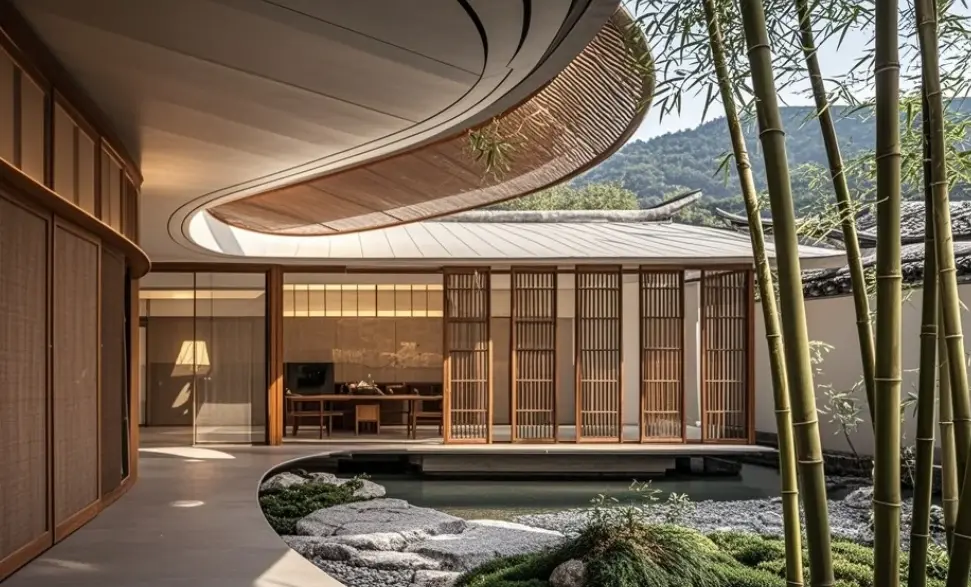

Have you ever walked into a room that instantly felt peaceful, while another space made you feel restless without any obvious reason?
Many Feng Shui practitioners would say you’re responding to the way Qi, or life energy, moves through the home.
Classical Feng Shui isn’t simply about decorating with lucky objects. At its core, it’s about understanding how the Five Elements—Wood, Fire, Earth, Metal, and Water—interact with one another and how those relationships influence the atmosphere of a space.
Once you understand these elemental patterns, it’s much easier to arrange your home in a way that feels balanced, comfortable, and supportive for everyone who lives there.
Why the Five Elements Matter in Home Feng Shui
Traditional Feng Shui views a home as a connected system rather than a collection of individual rooms. Every directional sector carries its own elemental quality, and many classical schools also associate those directions with different family members.
The idea isn’t that a single object will suddenly change someone’s life. Instead, Feng Shui looks at the overall balance of the environment. When one element becomes too dominant—or is constantly weakened by another—the space may feel less harmonious.
This is one reason why two homes with nearly identical floor plans can create completely different impressions.
When the Elements Fall Out of Balance
It’s easy to assume that more of a “good” element is always better. In traditional Feng Shui, that’s rarely the case.
Every element has strengths, but every element can also become excessive.
Too Much Fire Energy
Fire represents visibility, enthusiasm, recognition, and activity. Warm lighting, candles, electronic devices, and bold red accents all contribute to Fire energy.
But when Fire becomes overwhelming—especially in an area that already carries strong Fire qualities—the room may begin to feel overstimulating rather than inviting.
Some Feng Shui practitioners suggest that an overly fiery space can be associated with increased tension, impatience, or difficulty relaxing. If that sector also corresponds to a particular family member in a traditional Feng Shui assessment, the imbalance is thought to affect them more noticeably.
That doesn’t mean you need to remove every candle or television. Often, introducing calmer Earth or Water elements is enough to soften the overall atmosphere.
Too Much Water Energy
Water symbolizes wisdom, communication, career opportunities, and the smooth flow of resources. Aquariums, indoor fountains, glass features, and darker color palettes are all commonly linked to this element.
The good news is that Water isn’t considered “bad.” The challenge comes when there’s simply too much of it for a particular space.
In some schools of Feng Shui, excessive Water energy is traditionally associated with feeling emotionally drained or lacking motivation. Practitioners who also incorporate BaZi analysis may recommend limiting Water features if an individual’s elemental chart already contains abundant Water.
Rather than removing every Water feature, the goal is to restore balance by introducing supporting elements that create a more stable environment.
What Counts as Each Feng Shui Element?
Most homeowners don’t notice this at first, but nearly every decorative item naturally belongs to one of the Five Elements.
Here’s a simple reference guide.
| Element | Common Materials & Decor | Typical Colors | Traditionally Associated With |
|---|---|---|---|
| Wood | Houseplants, wooden furniture, bamboo, wicker | Green, teal, soft blue | Growth, creativity, new beginnings |
| Fire | Candles, lighting, televisions, computers, triangular shapes | Red, purple, hot pink | Passion, confidence, visibility |
| Earth | Pottery, ceramics, stone, crystals, clay | Beige, yellow, brown, terracotta | Stability, support, grounding |
| Metal | Metal furniture, mirrors, silver frames, iron décor | White, gray, silver, gold | Focus, organization, clarity |
| Water | Aquariums, fountains, glass décor, flowing shapes | Black, navy, deep blue | Career, wisdom, communication |
Notice that the material often matters just as much as the color. For example, a wooden cabinet painted white still carries strong Wood energy because of the material itself.
Should You Match Every Room to Its Element?
Not necessarily.
One of the biggest misconceptions about Feng Shui is that every room should contain only its “correct” element. Classical practice is usually much more flexible than that.
Instead, think about creating support rather than perfect matching.
For example, if a room already contains a lot of metal furniture, introducing a healthy green plant may soften the space by bringing in Wood energy. Likewise, ceramic accessories often help create a more grounded feeling in rooms filled with bright lighting and electronic devices.
Small adjustments often have a greater impact than complete redesigns.
Where BaZi Fits Into the Picture
Here’s the thing: the same Feng Shui layout doesn’t work equally well for everyone.
Many traditional practitioners combine Feng Shui with BaZi, also known as the Four Pillars of Destiny. A BaZi chart examines the elemental balance present at birth and may offer additional insight into which elements are considered supportive or excessive for an individual.
From that perspective, decorating a home isn’t just about following compass directions. It’s also about creating an environment that complements the people living there.
Because BaZi analysis is highly personalized, broad Feng Shui guidelines should be viewed as a starting point rather than a one-size-fits-all formula.
A Balanced Home Usually Feels Better
You don’t need to renovate your home or replace all of your furniture to create better Feng Shui.
Sometimes the biggest difference comes from paying closer attention to how materials, colors, and decorative pieces work together. A few thoughtful changes can make a room feel calmer, brighter, or more welcoming without dramatically changing its style.
The goal of Feng Shui isn’t creating a perfectly arranged house.
It’s creating a home that feels balanced, comfortable, and supportive for the people who live there.


