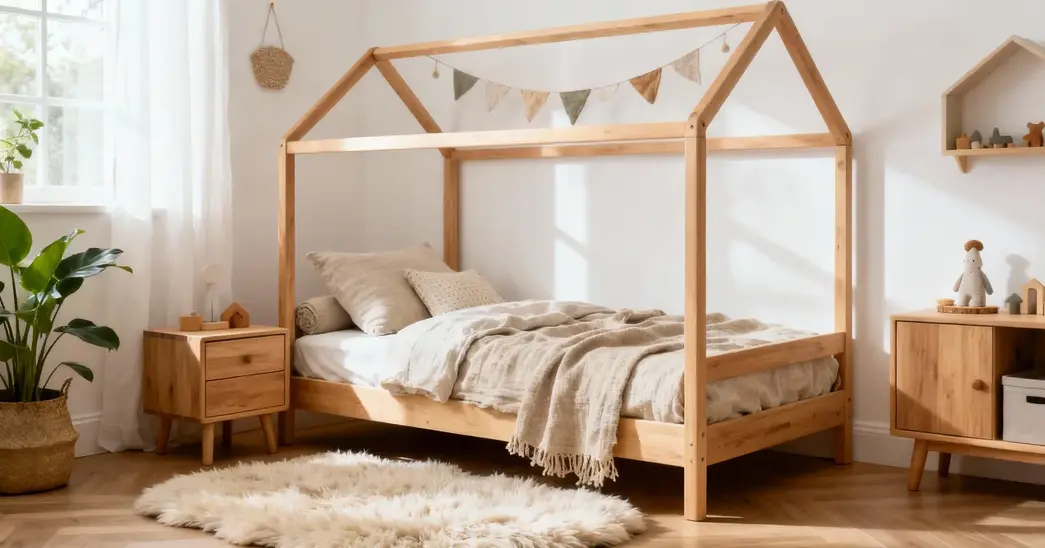

A child’s bedroom is never just “a place to sleep.” It’s where they decompress after school, process emotions, daydream, and quietly grow into their personality.
From a Feng Shui perspective, this room carries a very specific kind of energy—soft, shaping, and surprisingly sensitive to its surroundings. That doesn’t mean you need a perfect Pinterest setup. But small design choices can influence how calm, focused, or restless a child feels day to day.
Here are some of the most commonly discussed Feng Shui considerations for children’s bedrooms, explained in a simple, practical way.
1. Rooms Next to Noise or Under Unstable Structures
In many homes, children’s rooms end up near utility areas, staircases, or directly under balconies. It seems harmless at first.
But here’s the thing: Feng Shui views consistent noise and overhead movement as “unstable qi.” It creates a background level of stimulation that never fully settles.
Most homeowners don’t notice this immediately. Kids just become “light sleepers” or “easily distracted,” and it gets brushed off as personality.
A simple fix is choosing a quieter room whenever possible—or softening the environment with thicker curtains, rugs, and furniture that absorbs sound instead of reflecting it.
2. Mirrors Facing the Door
Walk into many modern kids’ rooms and you’ll see this setup: mirror right across from the door.
From a Feng Shui perspective, this placement tends to reflect incoming energy straight back out. It can feel visually busy, especially for children who are already sensitive to stimulation.
Does this mean your home has “bad Feng Shui”? Not at all. It just means the space might feel more active than restful.
If possible, shift the mirror to a side wall or angle it away from the entrance. In smaller rooms where that’s not realistic, even covering it at night can soften the visual intensity.
3. Overly Complicated Ceilings and Hanging Decor
Children don’t always articulate why they feel uneasy in a room—but ceiling design can play a subtle role.
Heavy lighting fixtures or cluttered ceiling decorations can create what Feng Shui practitioners often describe as “pressing energy” above the resting body. Psychologically, it’s not hard to understand why that might feel a bit tense.
The good news is you don’t need a full renovation. A flat, light-colored ceiling with simple lighting often creates a more open feeling.
In many homes, this small adjustment makes bedtime noticeably easier without changing anything else.
4. Dark Reds, Heavy Carpets, and Overstimulating Textures
Color in a child’s room is more powerful than people assume.
Deep red, for example, carries strong Fire energy in Feng Shui theory. It’s active, stimulating, and not always ideal for rest-heavy environments like bedrooms.
Shaggy carpets can also create practical issues—dust accumulation, allergens, and a general sense of visual heaviness.
Instead, many designers and Feng Shui practitioners lean toward softer palettes:
- Warm beige
- Light greens
- Soft blues
- Gentle earth tones
It’s not about removing personality. It’s about reducing unnecessary stimulation in a space meant for recovery.
5. Too Many Wind Chimes or Constant Movement Objects
Wind chimes are often used in Feng Shui, but bedrooms are a different story.
In a child’s room especially, too much movement or sound energy can create restlessness. Even visually, constantly moving objects can make it harder for the mind to settle.
So, should you avoid them completely? Not necessarily.
One small decorative piece is fine. But multiple moving elements near the bed can turn the room into a space that never fully “rests,” especially for sensitive sleepers.
6. Lighting and Color Balance
A bright, naturally lit room usually supports a child’s daytime energy and focus. But harsh lighting or overly saturated colors can do the opposite.
From a Feng Shui perspective, balance matters more than brightness alone.
Soft natural light paired with neutral or warm tones tends to create a steadier emotional rhythm. It’s one reason why overly neon or high-contrast color schemes often feel chaotic over time.
7. Overdecorated Spaces That Leave No “Breathing Room”
It’s easy to go overboard in kids’ rooms—especially with toys, shelves, wall art, and themed decor.
But here’s something many parents notice: when a room is visually crowded, children often struggle to focus or wind down at night.
Feng Shui describes this as “scattered qi,” but even without that framework, the effect is familiar. Too much visual input makes relaxation harder.
You don’t need a minimalist space. Just a bit of empty wall space or uncluttered floor area can change how the room feels.
8. Locking Away Comfort Objects (Toys and Soft Items)
This one surprises people.
Children often form emotional attachments to stuffed animals or familiar toys. Removing them completely or storing them out of sight can sometimes make a room feel less emotionally safe.
Feng Shui views bedrooms as spaces of emotional grounding. Familiar objects—when not excessive—can actually support that sense of comfort.
The key is balance. A few meaningful items visible in the room usually feel better than total removal or chaotic overflow.
9. Bed Alignment With Bathroom Doors
This is a classic layout concern.
When a bed faces a bathroom door directly, some Feng Shui schools describe it as a flow of draining or unstable energy entering the sleep space. Practically speaking, it also introduces moisture, noise, and visual interruption.
So what can you do?
A partial screen, a plant divider, or even adjusting the bed angle slightly can soften the direct alignment without major renovation.
The good news is this is one of the easiest layouts to improve.
10. Wall Art and Visual Stories in the Room
Children’s rooms often feature wallpaper, posters, or themed artwork—and this is where design choices quietly matter.
Feng Shui isn’t about banning certain images. It’s more about emotional tone.
Highly aggressive or chaotic imagery can feel overstimulating over time. Softer scenes—nature, animals, simple patterns—tend to support a calmer environment.
Think of it this way: walls are the last thing a child sees before sleep and the first thing they see in the morning. The visual “story” matters more than people realize.


