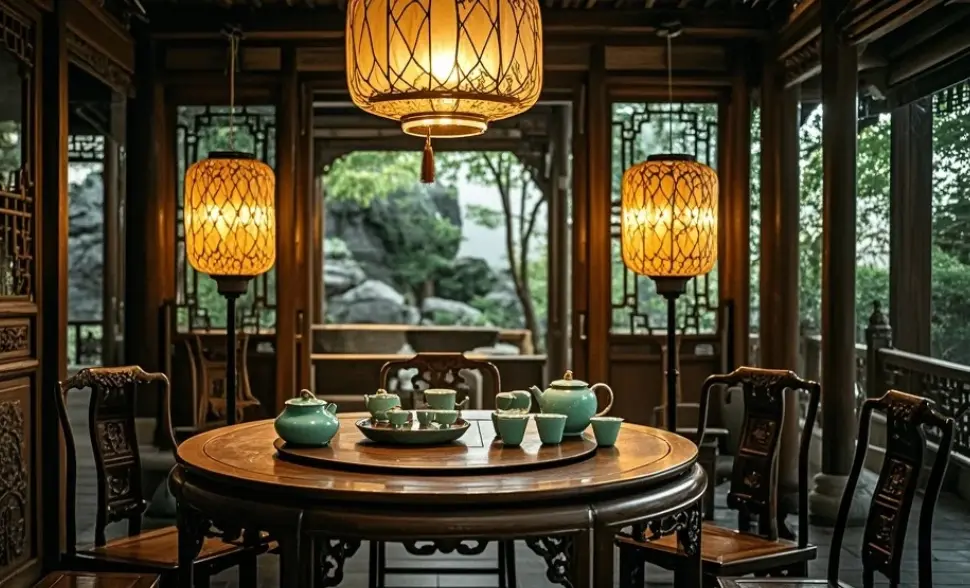

Housewarming Parties in Feng Shui: Why Your Home Feels Different After Guests Arrive
Let’s be honest—moving into a new home is exciting, but also exhausting.
Boxes everywhere. Half-finished rooms. That strange in-between feeling where nothing is quite settled yet.
So when someone suggests hosting a housewarming party, the first reaction is usually: maybe later.
But in Feng Shui, that moment right after moving in is actually considered one of the most important phases for setting the tone of your home.
And yes, inviting people over plays a bigger role than most homeowners realize.
A New Home Isn’t “Fully Alive” Yet
There’s a subtle idea in traditional Feng Shui that new or recently renovated homes carry a kind of quiet, neutral energy.
Not bad energy. Just… unfinished.
Many practitioners describe it as a space that hasn’t fully “settled” into daily life yet. No routines. No emotional imprint. No real sense of human rhythm.
That’s why some homes can feel oddly cold at first, even when they’re beautifully designed.
So should you worry?
Not really. It’s more of a transitional phase than a problem.
The good news is, this is exactly where a housewarming gathering naturally fits in.
Why People Change the Energy of a Space
Here’s the thing: a home doesn’t just respond to furniture or décor. It responds to activity.
Talking, laughing, moving around, even the sound of dishes in the kitchen—these are all forms of what Feng Shui refers to as human presence energy.
Some schools of Feng Shui suggest that when people gather in a space, the room begins to “wake up” in a symbolic sense. The atmosphere shifts from static to dynamic.
It’s not about superstition. It’s more about how human environments naturally feel more alive when they’re used.
A quiet apartment is one thing.
A home filled with conversation feels completely different.
That contrast is really what Feng Shui is pointing to.
Housewarming Parties and the Idea of Activating Qi
From a Feng Shui perspective, Qi is always moving. It doesn’t like stagnation.
A newly occupied home often has a lot of stillness—especially if the homeowner is busy unpacking and not yet living fully in the space.
A housewarming party changes that rhythm very quickly.
You suddenly introduce:
Movement through every room
Emotional warmth through conversation
Sound that breaks up silence
Shared attention across the space
Some Feng Shui practitioners describe this as “activating Qi through people,” meaning the home begins to circulate energy more naturally once it’s lived in socially, not just physically.
Does that mean your home is “inactive” without guests?
Not exactly. But social energy does add a different layer of vitality that everyday routines alone don’t always create.
Why Empty Space Can Feel Too Quiet
It’s easy to assume that a large, quiet home automatically feels peaceful.
But in practice, too much emptiness can sometimes feel a little disconnected—especially in open-plan layouts or bigger houses with only one or two occupants.
Feng Shui doesn’t necessarily view this as a flaw. It just means the space and the number of people aren’t fully interacting yet.
That’s one reason occasional gatherings are often encouraged.
Not constant noise. Not overcrowding. Just enough presence to balance out stillness.
A dinner with friends. A casual weekend gathering. Even a simple tea get-together.
These moments subtly change how a home feels afterward.
The Social Side Most People Overlook
There’s also a very practical layer here that doesn’t get talked about enough.
A housewarming party isn’t just about Feng Shui symbolism—it’s also about reconnecting.
In modern life, people drift. Work gets busy. Conversations turn into messages. Months pass without seeing close friends in person.
Moving into a new home creates a natural reset point.
Inviting people over does two things at once:
it grounds your new space socially, and it re-establishes real-world connections that are easy to lose track of.
That part alone often matters more than any design choice.
So, Do You Need a Big Party?
Not necessarily.
This is where Feng Shui is often misunderstood.
It’s not about scale. It’s about presence.
A small gathering of people you genuinely enjoy being around can shift the atmosphere of a home just as effectively as a larger event.
Some homeowners prefer a quiet dinner instead of a full house party—and that works perfectly fine too.
The intention matters more than the number of guests.
A Home Becomes a Home Through Life, Not Just Design
At its core, Feng Shui looks at how environments feel when they’re actually lived in.
A beautifully designed space is one thing. A space that has been shared, laughed in, and experienced with others feels completely different.
That’s really what a housewarming represents—not a performance, but a transition.
The moment a house stops being just a structure and starts becoming part of your daily life.
And honestly, that shift doesn’t happen overnight. It happens through moments like these.


