
A client painted her son’s study fire-engine red because she’d read that red means luck. Two weeks later he wouldn’t sit in there. “I followed the rule,” she said, “and it backfired.” It hadn’t. She’d painted a focus room with the one color that keeps a young mind buzzing, and the boy was reading it exactly right.
Feng shui colors are about how a shade makes a space feel. The right color matches the energy a room needs, and the rest is comfort dressed in older language. Walk the rooms with me and you’ll see the pattern faster than any chart.
The Five Elements, Quickly
I group color under the five elements because it gives clients a shortcut. Wood is green and brown, for growth and calm. Fire is red and orange, for heat and movement. Earth is yellow and beige, for steadiness. Metal is white and grey, for clarity. Water is blue and black, for stillness. You don’t need to memorize this. Just notice which energy a room is missing, then add a little of the right shade.
One thing I tell every client before we start: the undertone matters more than the named color. A warm beige settles a room; a grey beige can leave it cold even when the swatch looks “neutral.” I’ve watched two “beige” bedrooms feel like different houses. Hold the paint chip against your own furniture before you trust the label.
Step 1: The Bedroom Wants Low Energy
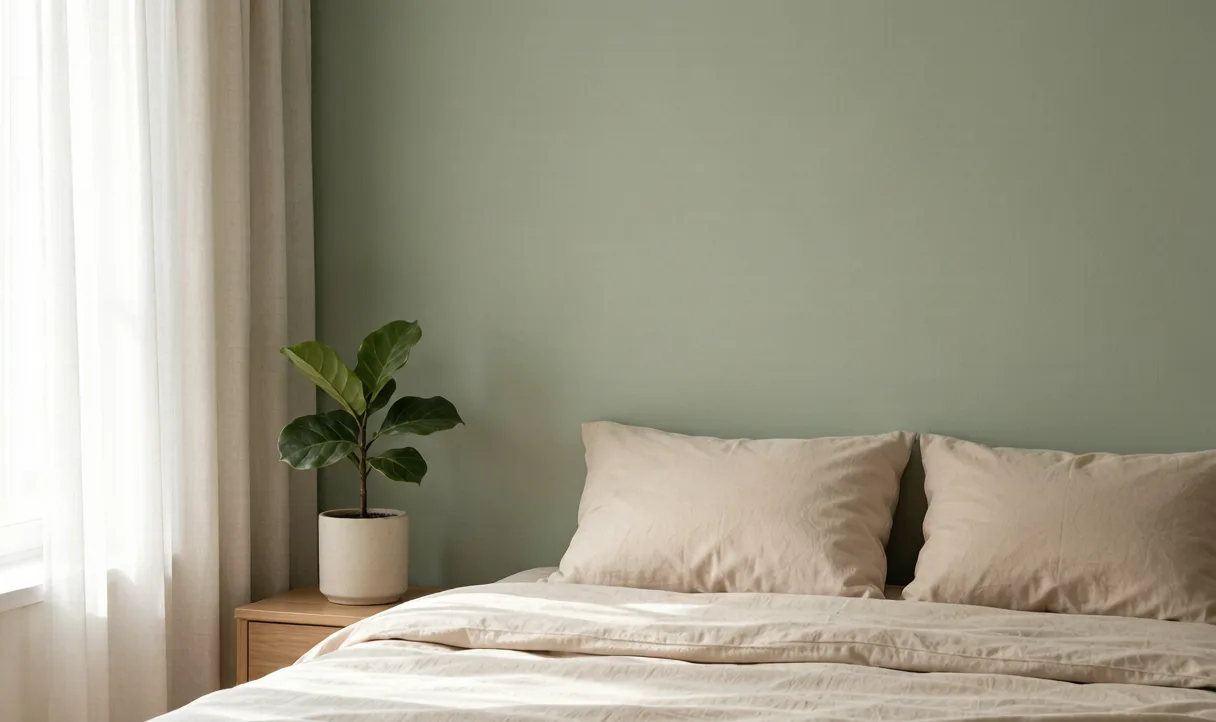
The bedroom is where the day unwinds, so it wants soft, quiet color. I tell clients to use muted greens, warm beige, or dusty blue, shades that help the room settle so you do too. Skip bright red on the wall behind the bed; it keeps the space awake when you’re trying to slow down. A client in a apartment once had a crimson feature wall behind the headboard and slept with the light on for a year. We repainted to a dusty blue and she forgot the light existed.
Step 2: The Kitchen Already Carries Fire
The kitchen runs hottest of any room, so it needs cooling, not more heat. A green or wood tone balances it. In a flat I swapped a red kitchen accent
for sage green and the client said dinner felt calmer. You aren’t picking “lucky” colors, you’re matching the shade to how the room is used. If the cabinets are already red or orange, pull the heat down with a green rug or a bowl of fruit on the counter rather than another hot wall.
Step 3: The Study and Home Office Want Wood
Focus rooms do well with Wood energy, green or a warm wood brown, because the eye reads growth and steadiness instead of stimulation. That study I opened with is the cautionary case: red there made homework a fight. A pale green or a soft olive on one wall changed how long the boy stayed at the desk. If you work from home, treat your office like a study, not a living room, and keep the loud colors out.
Step 4: Small and Busy Spaces Love White
White isn’t empty, it’s clean, and it lets the things in the room speak instead of fighting them. I reach for white in small, cluttered, or high-traffic spaces where a strong color would close the place in. A narrow hallway in a lane house looked half its size in a deep green; we went white and it opened up without moving a wall.
Step 5: Use Black as an Accent, Never a Flood
Black works as a grounding accent, a feature wall or a framed piece, but a black bedroom feels heavy and a black ceiling presses. I keep black to one surface per room. The same holds for the bathroom, which already carries Water energy: a calm blue or a soft stone grey suits it, while red in a bathroom reads as the one element fighting the room’s job.
Step 6: Test Before You Commit
One move saves most regret: repaint a single wall and live with it a week before committing to the whole space. Tape a few swatches up, watch them at morning and evening light, and notice which one you stop seeing. The color you forget is usually the one that’s doing its job.
I don’t pair color with direction much. The payoff next to simply liking the room is small, and a client who hates their “correct” wall color will feel it every day. Trust the felt response.
What You’ll Notice
Color is a nudge, not a cure. A calm, lit, uncluttered room in a shade you like beats a “perfect” element match every time. When the color is right you stop thinking about it, and that’s the whole point. The mother didn’t need a luck charm, she needed a study her son could sit in.
I’m the founder of Fengshui Power, trained under the Zhengyi Dao lineage. These days I take clients entirely online: I review your BaZi chart and your home’s layout over a call or from the photos you send,
then give you a step-by-step plan. My about page covers my background, and a consultation is the way in.
Common Questions
What do the five elements colors mean?
Wood is green and brown for calm and growth, Fire is red and orange for energy, Earth is yellow and beige for steadiness, Metal is white and grey for clarity, and Water is blue and black for stillness. Notice which energy a room is missing, then add a little of that shade.
What color is best for a bedroom?
Soft, low-energy shades like muted green, warm beige, or dusty blue help the room settle. Avoid bright red on the wall behind the bed, since it keeps the space awake when you’re trying to wind down.
Can color fix a bad room?
No. Color is a nudge, not a cure. A calm, lit, uncluttered room in a color you like beats a perfect element match. Fix the light and the clutter before you reach for paint.
Should I paint the kitchen red for fire?
No. The kitchen already carries the most Fire, so a cooling green or wood tone balances it better than more red. If the cabinets are already hot, add a green rug or fruit bowl instead.
Does black work in feng shui colors?
As an accent, yes. A black feature wall or framed piece grounds a room. Keep it to one surface, and never paint a bedroom or ceiling black, since both then feel heavy or pressing.


