
Most people don’t call me because they’re curious about feng shui. They call because something in the house feels stuck. The same argument keeps circling the kitchen. Sleep won’t come in one bedroom. The home office drains the day before it starts. Feng shui for home is really about that stuck feeling. At its core it’s the practice of arranging each room so energy, what we call qi, moves freely and supports how you actually live. You don’t need statues or red envelopes to notice a difference. The fastest, most reliable wins almost always sit in three spots: the bed, the stove, and the front door. Those are the places that touch your sleep, your meals, and the first minute you walk in each morning.
Feng Shui for Home Starts at the Front Door
Walk in your own front door and look back. What does your eye land on? If it’s a pile of shoes, a narrow hallway, or a bathroom door swinging open straight ahead, that entry is working against you.
The door is where qi enters, and in my work it sets the tone for the whole place. A cluttered entry tells the house you’re too busy to receive anything good. A good first step is to keep the path clear and put a single warm light by
he door. Renters can do this with a stick-on sconce, no wiring needed.
If your door lines up with a staircase or a mirror, the energy is said to rush straight back out. A curtain or a small plant at the base of the stairs softens that pull. You’re not blocking anything magical. You’re just slowing the eye so the space feels settled.
The Living Room: Where the Day Collects
The living room is where a household actually meets itself. That’s why I look at the sofa first.
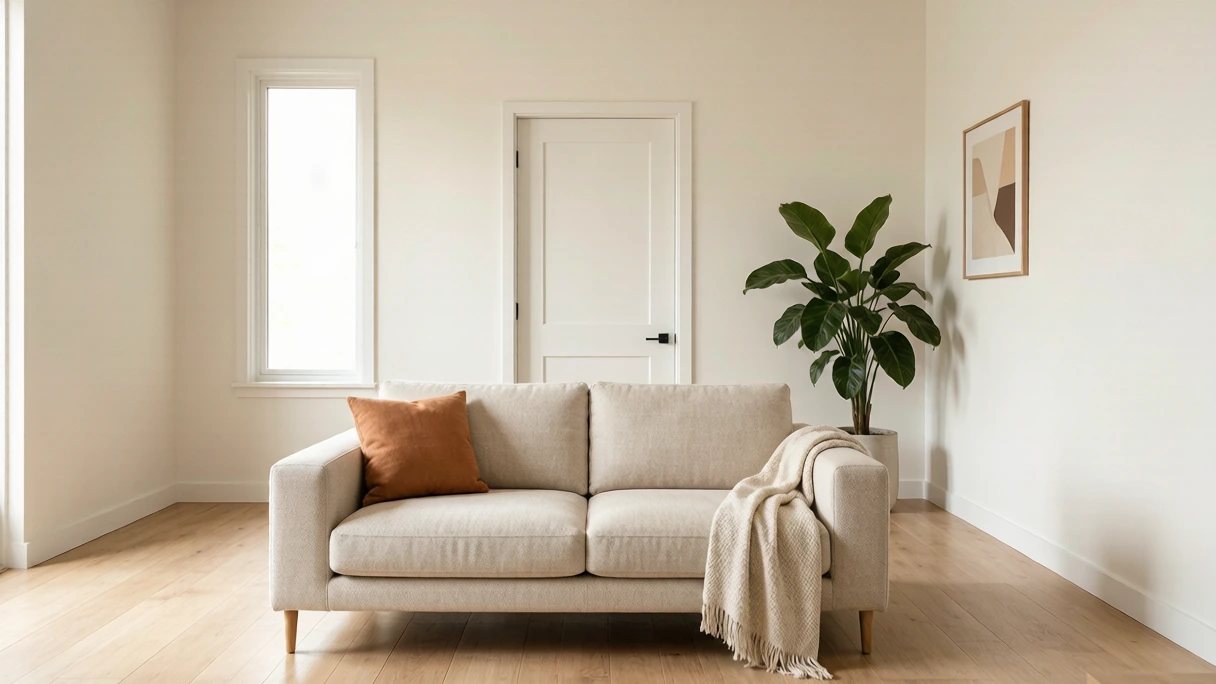
A sofa does best against a solid wall, with a clear view of the door. We call that the command position. When your back is to the entrance, you stay subtly braced, and people feel it even if they can’t name it. If the layout forces a floating sofa, anchor it with a console table and a tall lamp so it feels supported instead of floating.
Keep the center open. A coffee table is fine, a maze of ottomans is not. Clutter there has a way of leaking into how people treat each other, which is why I tell clients to clear the floor before they buy anything new. For a deeper pass on seating and layout, see my guide to living room sofa placement.
The Bedroom: Your Private Reset Button
Of all the rooms, the bedroom rewards attention fastest, and it’s the one I spend the most time on with clients. You spend a third of your life in it, and the quality of that third colors everything else.
The big one is the bed. Ideally the head sits against a solid wall, never under a window. I know, plenty of apartments only have one wall for the bed, and if you’re renting you can’t just move the window. A solid headboard and a heavier curtain do the job instead, so the window stops feeling like open sky at your back. I had a client in a studio who slept for months with her bed under the only window, convinced she was a light sleeper by nature. Two weeks after we anchored that wall with a headboard and lined the glass, she told me she’d started sleeping through the night. Nothing about her changed except the sightline.
Mirrors are another quiet problem. A mirror facing the bed catches movement all night, and many homeowners tell me they sleep lighter in that room. Turn it to the wall or cover it at night.
Try to see the door from the bed without being directly in line with it. That diagonal view lets you rest instead of staying on guard. More on this in the bedroom feng shui guide.
The Kitchen: The House’s Wealth Center
Let me be clear about the stove, because people overlook it: it matters more than almost any crystal you could buy. In the tradition I practice, the stove stands for nourishment and steady income, and leave the stove grimy and it tells the same story as letting your accounts go quiet.
Keep it clean, especially behind the knobs. Don’t let the stove sit directly across from the sink if you can help it, since water and fire pull against each other there. If your layout is fixed, a small wood cutting board between them bridges the two.
A stove with its back to a window loses that sense of support. If yours does, a healthy plant on the sill or a warm backsplash color gives it something to lean on. These are small moves, but they change how the room feels when you cook. The full breakdown is in my kitchen feng shui rules.
The Home Office: Focus and Momentum
Working from home blurs everything, and the desk placement shows it fastest. Sit with your back to a wall and your eyes on the door. Facing a blank wall all day quietly flattens your momentum, which is the opposite of what a study is for.
Light matters more than people expect. A dim corner drags the whole quarter down with it, so put the desk where daylight reaches it, and add a task lamp you actually like. One plant is enough. A jungle isn’t.
If the room doubles as a bedroom, divide it with a shelf or a screen so sleep and work don’t share the same air. I cover the layout in the home office guide.
Small Spaces and Renters
Most of my clients in the US and UK rent, and renters ask the same smart question: what can I do without losing my deposit?
Plenty. Everything above works without drilling a single hole. Tension rods, removable hooks, rugs, and lamps do the heavy lifting. The point of feng shui for home was never permanent construction. It was always about how you live in the space you have. Start with the renter’s feng shui checklist.
Doing It Yourself vs. Getting a Second Pair of Eyes
You can take most of this a long way on your own, and I’d rather you try than wait. But some layouts fight themselves, and a floor plan only shows so much on paper.
I’m the founder of Fengshui Power. I trained in the Zhengyi Dao lineage and work in the Yang-style method, with bazi and qimen for the deeper reads. Most of my clients are in the US and UK, many of them in rentals rather than mansions. If a room keeps resisting you, that’s what a consultation is for, and the good fortune interest list is the easy first step.
Common Questions
Is feng shui for home just decoration?
Not really. Decoration is one tool. The aim is how a room functions and feels, so a cleared entry or a turned mirror counts more than any object you buy. I had a client who bought three fountains before she ever cleared her entry. The fountains did nothing. The cleared entry changed how she felt walking in.
Can renters actually practice feng shui?
Yes, and most of my clients do. Removable fixes like rugs, lamps, and headboards change the feel without touching the walls. A tenant in a studio once fixed her whole sleep with a fourteen-dollar headboard and a curtain. No permission from the landlord needed. Start from the renter guide.
Which room should I fix first?
The bedroom. You spend the most time there, and sleep quality shows up everywhere else. The bed and the front door are the two fastest wins.
Do I need a compass?
Helpful for advanced work, not required for the basics. I’ve corrected bedroom layouts for years without pulling a compass out of the drawer. Get the bed, stove, and door right first, then add direction later if you want.
How long until it feels different?
Often within a week. You’re changing daily habits and sightlines, not waiting for a charm to work. One client texted me a week after moving his desk: “I didn’t expect to look forward to work.” That was the sightline, not magic.
Related: Living Room Sofa Placement – Kitchen Feng Shui Rules – Home Office Feng Shui – Feng Shui for Renters


