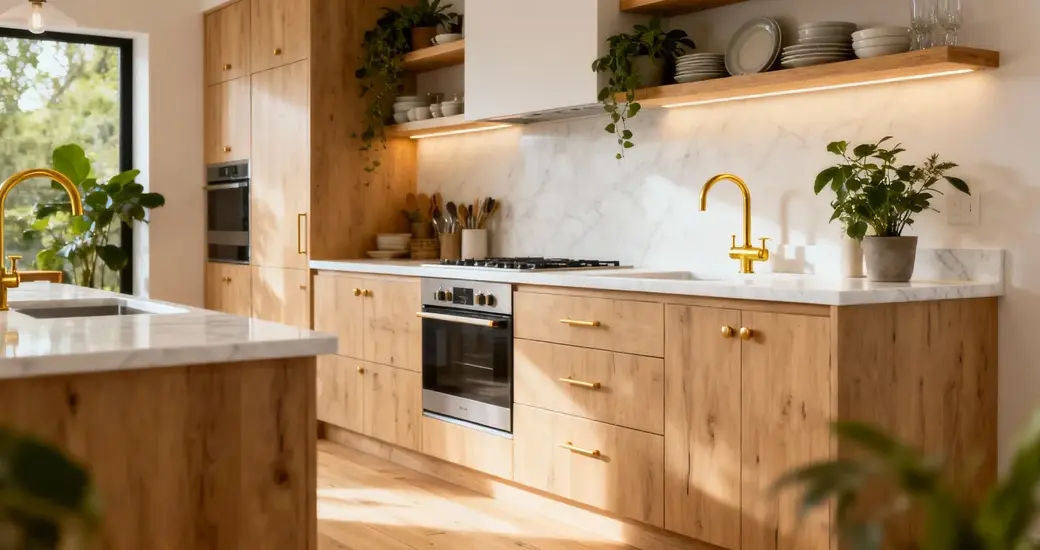

In most modern homes the kitchen is no longer tucked away. It sits open, sometimes part of the living room, and that visibility changes how the whole space reads. Kitchen direction feng shui asks a simple question about this central room: which way does it face, and what does that do to the feel of the home? The answer matters because the kitchen is where food is made and where the household tends to gather, so its energy touches daily life more than almost any other room.
In classical terms the kitchen carries fire energy. That does not mean drama. It means warmth, nourishment, and the kind of movement that comes with cooking. Food transforms here, and that transformation is tied to health and stability in the home. The direction the kitchen faces shapes whether that fire feels balanced, quiet, or a little too strong.
Kitchen direction feng shui starts with the five elements
Before naming each direction, one idea helps everything make sense. The five elements, wood, fire, earth, metal, and water, interact in cycles. Some pairs support each other, some control each other, and the kitchen’s fire element meets a different partner depending on which way the room faces. That meeting is what gives each placement its character.
A north kitchen meets water. An east or southeast kitchen meets wood. South meets more fire. West and northwest meet metal. Northeast and southwest meet earth. None of these is good or bad on its own. Each simply asks for a different kind of balance, and most homes can get there with small changes.
North, east, and southeast kitchens
A north-facing kitchen pairs fire with water, which sounds like a clash. In practice the two tend to settle into a balancing effect. Fire does not overwhelm water, and water does not put the fire out. The result is often a calmer space with steadier routines and a more even emotional tone. It is a quietly dependable placement, especially for households that want fewer ups and downs.
East and southeast are the favorite directions in most feng shui writing, and for a clear reason. These directions carry wood energy, and wood feeds fire. That is a supportive cycle rather than a conflicting one. Kitchens here are often linked with career momentum, better focus for studying, and a general sense of forward movement. They also tend to feel more alive, particularly with good lighting and ventilation. If you cook in an east kitchen and the room feels bright and fresh, that is the wood feeding fire at work.
Northeast, south, and southwest kitchens
Northeast also carries earth energy. Fire produces earth in the classical cycle, so a northeast kitchen feels steady and contained rather than stimulating. Homes with a northeast kitchen tend to feel predictable in a good way, with fewer swings between busy and quiet. It is not the most dynamic placement, but it is dependable, which many households quietly prefer.
South is already a fire-heavy direction, so adding a kitchen turns the dial up. In daily life this can show up as a space that feels warm, sometimes a touch too warm. Conversations run louder, patience runs shorter, and the room carries a noticeable edge. This is not a flaw in the home. It is an excess of one element that responds well to cooler materials. Stone surfaces, earthy tones, and visually calming objects bring the balance back without a renovation.
Southwest is more sensitive. It carries earth energy and, in classical mapping, connects to the health and stability sector of the home. A fire-heavy kitchen here can feel draining over time if left unbalanced. The fix is grounding: warm neutral colors, a stable and uncluttered layout, and a clear path through the room. Many southwest kitchens simply need a little more attention to calm, solid choices rather than anything dramatic.
West and northwest kitchens
West and northwest carry metal energy, and metal controls fire in the classical cycle. That controlling relationship can read as friction. Not open conflict, more a stop and start feeling in daily routines, where things do not always flow but never fully break down either. Homeowners describe the mood as occasionally unstable.
The easy remedy is to soften the contrast with wood. Natural wood cabinetry, a few healthy plants, and warm lighting ease the tension both visually and in how the room feels to use. You do not need to rebuild anything. A wood cutting board on the counter, a plant on the windowsill, and a warmer bulb often do most of the work.
Inside the kitchen: stove and sink placement
The direction is only half the picture. What happens inside the kitchen often matters more. The main rule is that water and fire should not sit directly across from each other. That is why a sink placed to face the stove is usually avoided. The concern is contrast. Two opposing elements pushed hard against each other make the space feel tense, both to look at and to cook in.
A small counter or a stretch of workspace between the stove and the sink is usually enough. A little breathing room lets the two functions share the space without fighting for the same sightline. This same idea applies to the fridge and the stove, or any pair where hot and wet meet head on.
For color choices that support balance, see our guide to feng shui colors by room and the fuller feng shui color guide. Healthy plants in the kitchen help ease metal controlling fire in west and northwest layouts. To clear clutter that makes any kitchen feel heavy, our items to remove from home checklist helps. For the bigger picture across the house, start with our feng shui tips pillar or book a consulting session for a read of your specific layout. Also worth a look: common home decor mistakes that show up in kitchens.
Common Questions
Which kitchen direction is best in feng shui? East and southeast are the most favored because wood feeds the kitchen’s fire, a supportive cycle linked with momentum and focus. North is calm and balanced, while south and southwest need more attention to cooling and grounding. The best direction is the one you can balance well, not a single perfect point.
Is a south-facing kitchen bad? No. South adds more fire, which can make the room feel warm and a bit intense, but stone surfaces, earthy tones, and cooler visuals restore balance. The placement is fine once the excess fire is tempered.
Why should the stove not face the sink? The stove is fire and the sink is water. Placing them directly opposite each other creates a hard contrast that makes the space feel tense. A small counter between them gives each element room and settles the feel of the kitchen.
Can plants fix a west or northwest kitchen? Plants add wood, and wood softens metal’s control over fire. A few healthy plants plus warm wood tones and lighting ease the friction these directions can bring. They are a practical, low-cost balance rather than a cure-all.
Does kitchen direction really change how a home feels? The direction shapes which element meets the kitchen’s fire, and that meeting affects light, mood, and routine more than people expect. Small material and layout choices then tune the balance. The effect is about daily comfort, not prediction.
