
Bedroom feng shui gets a reputation as a rigid rulebook where one wrong chair ruins your life. That version isn’t real. The bedroom matters because it’s the room where your body resets every night, and a handful of specific layouts quietly work against that reset. The fixes are almost always small: move a thing, cover a thing, close a door. You don’t need a renovation to sleep better.
I’m the founder of Fengshui Power. I trained under the Zhengyi Dao lineage at Longhu Mountain and practice Yang Gong feng shui, Bazi, and Qi Men Dun Jia with clients across the US and UK. The six problems below are the ones I walk clients through most often, and none of them requires knocking down a wall.
The bedroom feng shui problems clients actually ask about
Most bedrooms I see have at least one of these. They aren’t disasters. They’re friction points that add up over hundreds of nights.
Electronics crowding the bed
Modern bedrooms double as offices and screening rooms, so TVs, laptops, and charging phones end up right where you sleep. In feng shui terms the bedroom should lean toward calm, restful energy, and screens pull it the other way with their light and buzz. The bed opposite a TV is the classic one: your eye lands on a bright, moving rectangle instead of settling into the dark. You don’t have to ban devices. Charge your phone across the room, and if there’s a TV, keep it off to the side and cover it at night. Clients tell me they sleep deeper the week they do this, with no other change.
A bathroom door lined up with the bed
This shows up constantly on consultations. The bathroom is the one room built for water and waste to leave the home, so when its door points straight at the bed, the two spaces trade energy all night. Traditional teaching reads this as the bedroom’s calm leaking out toward the drain. I don’t tell people to panic. A closed door does most of the work, and a folding screen or a tall plant between the two breaks the sightline completely. The aim is simple: the bed shouldn’t be the first thing the bathroom door reveals.
A bedroom that’s bigger than it needs to be
People assume bigger is better, but older feng shui texts favor bedrooms that feel intimate. An oversized room can leave the resting energy feeling scattered, so instead of cozy it reads as empty and a little exposed. If you’ve landed in a large primary suite, you don’t need new walls. Anchor the space with a substantial rug under the bed, upholstered pieces, layered curtains, and a reading corner with warm light. Those moves visually gather the room inward, which is exactly what a good bedroom wants.
Floor-to-ceiling glass beside the bed
Big windows are lovely by day and tricky by night. When the bed sits against a wall of glass, the sleeping spot feels open to the outside, and feng shui reads that as energy that won’t hold still. This worry predates modern architecture by centuries. The cheapest fix is also the best: heavy curtains drawn after sunset. They give the bed a sense of enclosure, soften streetlight, and tell your body the day is done. If curtains alone aren’t enough, a low bench or a row of plants along the glass adds a second layer of protection.
Harsh east or west sun at the wrong hour
Light itself isn’t the problem. Intensity is. Early eastern sun or a hard western afternoon through the bedroom window pushes the room toward too much active energy right when you want it quiet. Sensitive sleepers feel it even with their eyes closed. Blackout curtains, layered treatments, or adjustable blinds let you keep the daylight you like and cut the glare at the bright hours. Balance beats perfection here, same as everywhere else in the home.
A heavy fixture hanging over the bed
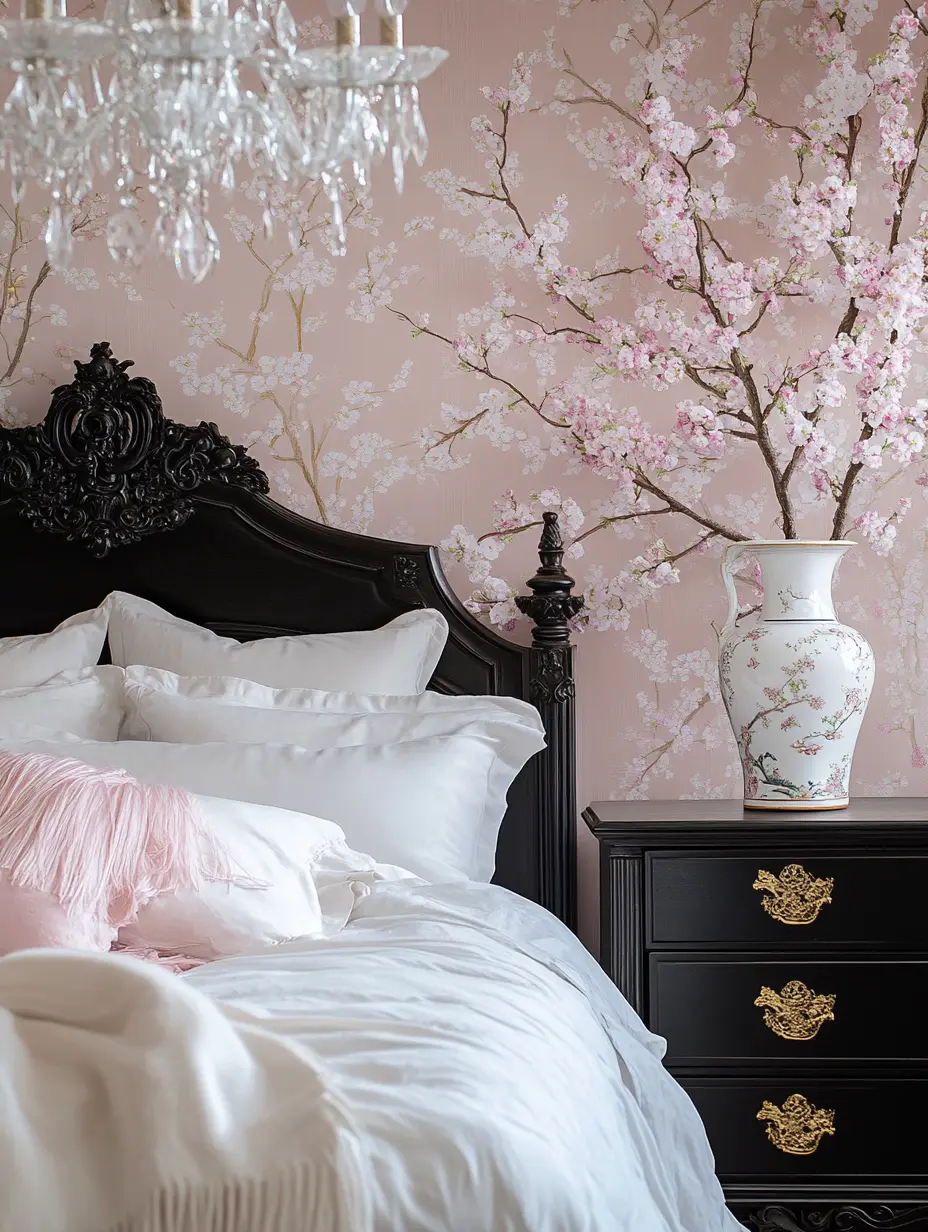
This is one of the oldest pieces of feng shui advice, and you don’t need to believe in feng shui to feel it. A big chandelier or pendant directly above where you sleep adds visual weight to the one spot that should feel light and free. Interior designers call it visual mass, and they’ll tell you the same thing: something heavy overhead makes a room feel less relaxed, secure or not. Swap the overhead light for table lamps, wall sconces, or a floor lamp. Soft, indirect layers support a calmer evening and stop the ceiling from pressing down on the bed.
What to actually do first
If you only change one thing, start with the bed itself. Get the electronics off the nightstand, close the bathroom door, and draw the curtains at night. Those three take ten minutes and remove the three most common sources of bedroom friction I see. The rug, the lamp, and the screen are the next layer once the basics feel right.
If your bedroom fights you on several of these at once, or you’re setting up a new home, that’s worth a proper look. My consulting service covers exactly this, and you can join the good fortune interest list for the free guide I send on reading your own space.
Common Questions
Does bedroom feng shui really affect sleep?
The layouts above don’t cause insomnia on their own, but they add small friction night after night. Screens by the bed, an open bathroom door, and bright glass at night all make it harder to settle. Most clients sleep better once those are handled.
Is it bad to have a TV in the bedroom?
Not forbidden, just poorly placed. A TV opposite the bed keeps your eye on a bright screen instead of the dark. Put it to the side and cover it at night, or move it out entirely if sleep is a struggle.
What should I do if the bathroom door faces my bed?
Keep the door closed as a habit. Add a folding screen or a tall plant between the bed and the door so the bathroom isn’t the first thing the door reveals. That breaks the direct line without moving walls.
Can a bedroom be too big for feng shui?
Yes, an oversized room can feel scattered rather than cozy. Anchor it with a large rug, upholstered furniture, layered curtains, and warm zone lighting so the space gathers inward around the bed.
Is a ceiling light above the bed bad?
A heavy fixture directly overhead adds visual weight where you want to feel free. Use table lamps, sconces, or a floor lamp for soft indirect light, and reserve the ceiling light for when you’re not in bed.


