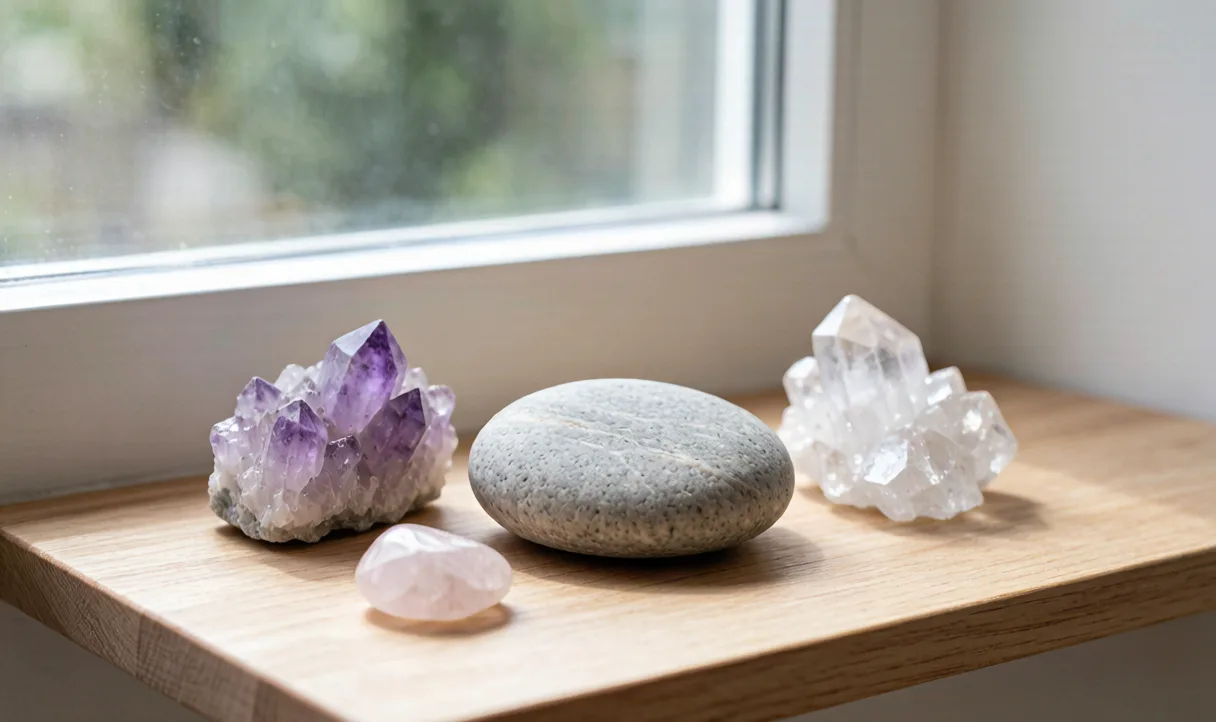

Let me say this plainly, because the internet won’t. The “citrine attracts money, rose quartz attracts love” version of Feng Shui crystals is not classical Feng Shui. It’s a Western New Age idea — crystal healing from the 1970s — that got rebranded with Chinese terms in the 1990s. The old Chinese texts, the ones practitioners actually study, don’t list a single gemstone by purpose.
So if you came here for permission to keep your crystals, here it is: keep them. If a stone on your desk makes you feel steady, that’s real value. But call it what it is — a personal reminder, not a metaphysical engine.
The psychology is genuinely interesting. Studies where people held real crystals versus identical glass fakes found no difference in what they felt. The effect came from expectation. That’s not nothing. A smooth stone you’ve assigned “calm” to is a tactile anchor for a calm mind. Worry stones exist in every culture for a reason.
From a Feng Shui perspective, the classical way to balance the five elements is environmental, not object-based. Need more Metal? The old texts point you to metallic tones in clothing, railings, hardware, or spending time in the home’s west and northwest. Not a tower of amethyst on the shelf.
Many practitioners believe a bowl of mixed crystals in the living room often signals chaos, not harmony. Removing them tends to make a space feel calmer — not because the stones “released negativity,” but because you cleared visual clutter you’d stopped seeing.
That doesn’t necessarily mean crystals are fraud. It means the benefit is in the meaning you bring, not the mineral itself. Treat them like art or jewelry: things you like, displayed with intent.
The good news for skeptics: you lose nothing by skipping them. The good news for believers: you lose nothing by keeping them, as long as you’re honest about why they help.
Feng Shui at its core is about how a space makes you feel and function. A crystal that does that for you earns its spot. One you bought out of fear that your luck is broken doesn’t.


