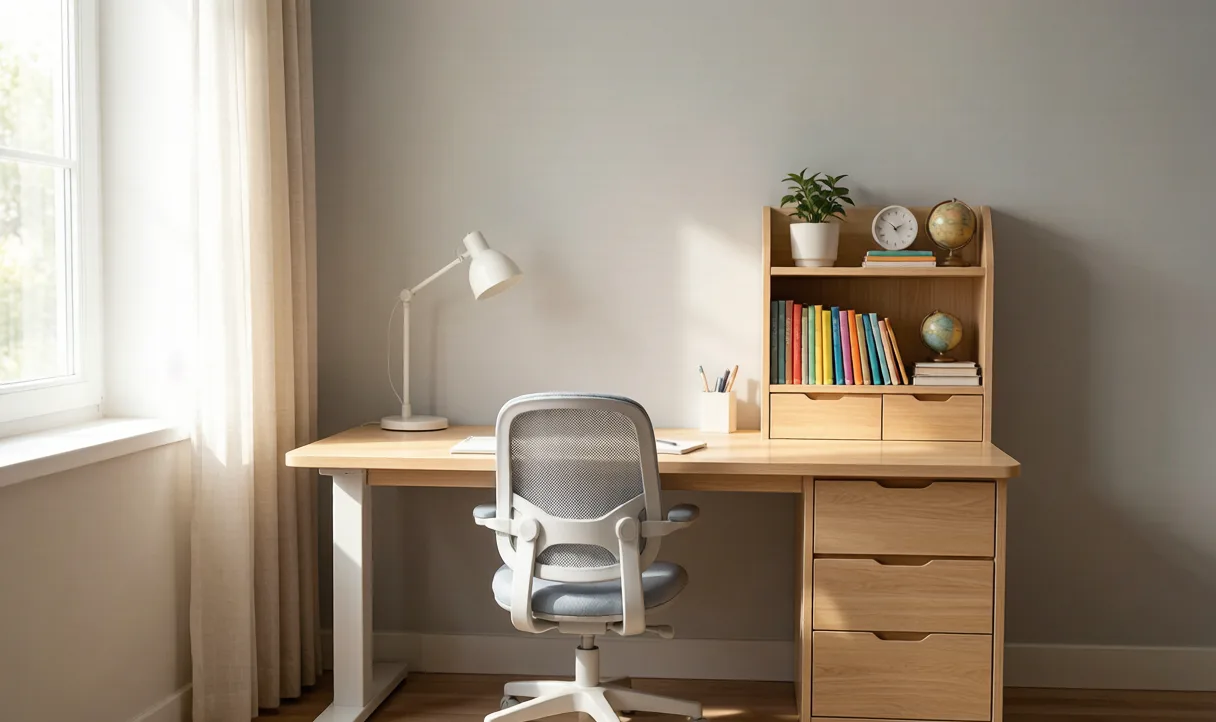

Parents ask about this one a lot, usually after a rough homework week. The desk position won’t magically raise a grade, but the room’s setup genuinely changes whether a kid can settle. Feng Shui just puts that in old language.
The desk against a solid wall
From a Feng Shui perspective, a desk pushed against a solid wall with the chair facing into the room is the “commanding position” for study. The child has the wall at their back (support, no one sneaking up) and
can see the door. That sense of safety is real — it’s why adults hate sitting with their back to a busy pathway too.
Many practitioners believe a desk facing a bare wall also cuts distraction. No window-gazing, no hallway drama.
What to skip
- Desk under a window: light is nice, but the outside pulls attention and the glass at the back reads as unsupported.
- Desk in line with the door: too much through-traffic energy.
- A mirror beside the desk: it bounces movement and breaks concentration.
One simple fix is to turn the desk so the child sees the room but has the wall behind. Ten seconds, no tools.
The rest of the room
Keep the bed away from the desk so “rest” and “work” don’t share a corner. Traditional Feng Shui views mixing them as mentally muddy. A clear floor, one plant, and a tidy shelf do more than any gadget.
The good news is none of this needs a remodel. Some schools of Feng Shui pile on cures for a child’s room; I’d skip them. A calm, lit, uncluttered space that the kid helped arrange will beat a “perfect” layout every time.A room should help them think, not perform for a chart.


