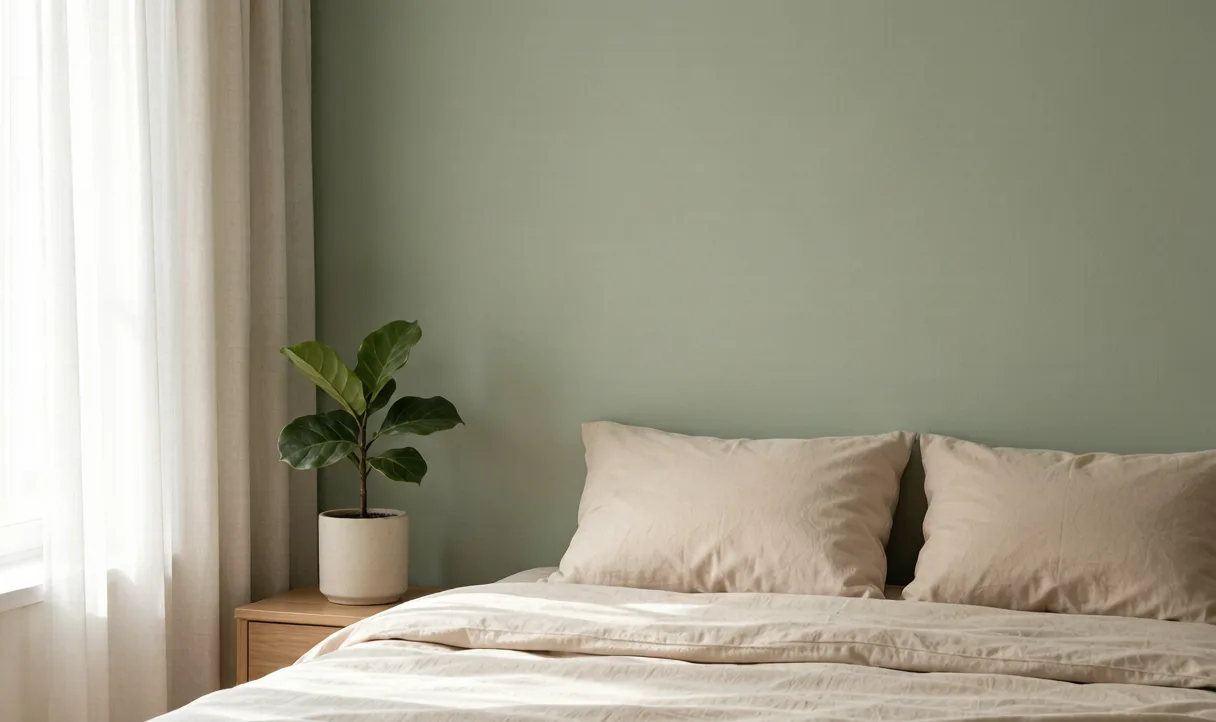

Ask most people about Feng Shui color and they’ll say red. Wealth, luck, fire — done. But if you paint every room red, you’ll live in a diner. Color in Feng Shui is really about how a shade makes a space feel, and that’s closer to plain design psychology than magic.
Start with the five elements
Traditional Feng Shui groups color under the five elements. Wood is green and brown — growth and calm. Fire is red and orange — heat and
energy. Earth is yellow and beige — steadiness. Metal is white and grey — clarity. Water is blue and black — stillness.
You don’t need to memorize this. Just notice which energy a room needs.
Room by room
The bedroom wants soft, low-energy color. Many practitioners suggest muted greens, warm beige, or dusty blue — shades that let the nervous system wind down. Skip bright red on the wall behind the bed; it keeps the room buzzing.
In many homes, the kitchen carries the most Fire already, so a cooling green or wood tone balances it. The good news is you’re not picking “lucky” colors, you’re picking ones that match how the room is used.
A few honest notes
- White isn’t “empty” — it’s clean and lets other things speak. Great for small, busy spaces.
- Black works as an accent, not a flood. A black feature wall can feel grounded; a black bedroom can feel heavy.
- Some schools of Feng Shui pair color with direction, but the payoff is small compared to simply liking the room.
One simple fix is to repaint one wall and live with it a week before committing to the whole space.


