
Dining Room Feng Shui: 10 Tips for a Prosperous, Harmonious Home
You can read a household by how the dining table feels at the end of the day. When the room is cramped, dim, or shoved against a bathroom wall, people eat fast and leave. When it is open, warm, and calm, they linger. That lingering is exactly what feng shui is after.
Dining room feng shui shapes family wealth and health because the table is where the household takes in both food and fortune. A square or rectangular room with a round table, warm light, and no beam or door in direct line supports steady energy. A room under a bathroom, cut by a ceiling beam, or lined up with the front and back doors drains it.
Here are the ten adjustments I make first when a client’s dining room feels off.
1. Give the room a balanced layout
A square or rectangular dining room keeps energy stable. Missing corners and sharp angles let qi slip out, which in practice shows up as money that never quite sticks. If your room is L-shaped or has a cut corner, fill the gap with a low cabinet or a tall plant so the eye reads a full rectangle rather than a bite taken out of the space.
2. Put it in the right place
The best spot is the heart of the home, between the kitchen and the living room, so food and conversation flow through the same center. Never set the dining room under or beside a bathroom. The damp, used air from a toilet crosses straight into where you eat, and clients who ignore this are the ones who complain about constant low-grade stomach trouble. If you cannot move it, a solid screen or a row of tall plants between the two doors cuts most of the drift.
3. Use warm light and warm color
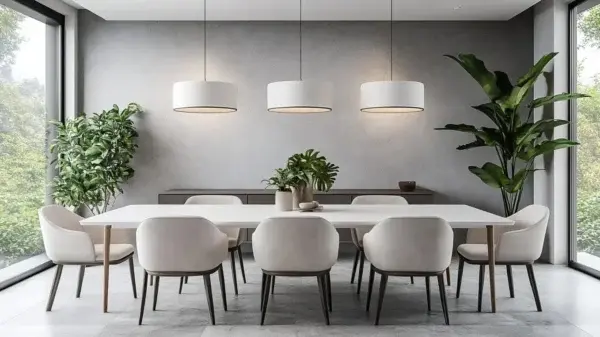
Warm beige, soft gold, or light yellow on the walls makes people slow down. Cool grey or stark white does the opposite and pushes the meal into a hurry. Put a round or oval fixture above the table. The curve reads as unity, and the warm pool of light pulls the family toward the center instead of toward their phones.
4. Pick the right table
Round and oval tables remove the sharp corner nobody wants to sit at, so arguments drop on their own. If you already own a rectangular one, that is fine. Seat people along the long sides and leave the two end chairs open, or soften the corners with a rounded runner. Six, eight, or nine chairs is the traditional lucky count, because those numbers read as growth rather than completion.
5. Add a mirror that doubles the table
A mirror that captures the table in its reflection doubles the food on it, which is the old symbol for doubled wealth. Keep it off the wall facing the kitchen or bathroom. Reflecting either one bounces used or cooking energy back into your meal, and that is the mistake I see most often in otherwise decent rooms.
6. Bring in the right plants
Broad-leaf plants like lucky bamboo or a small money tree sit well in a dining room corner because they hold steady, living energy. Skip cacti and thorny roses. Those spiky shapes read as friction, and a rose’s defensive thorns do the same thing at a smaller scale. Swap any wilting leaf the day you see it. A dying plant in the room where you eat is the one thing I tell clients to fix before anything else.
7. Choose symbols that mean one thing
Fu, Lu, and Shou prints (fortune, prosperity, longevity), pomegranate patterns for fullness, oranges for wealth, and dragon or bat motifs all invite the same idea. The bat works because its name, fu, sounds like the word for fortune. You do not need all of them. One plate or one framed piece is enough. A wall crowded with every symbol reads as noise, and noise is the opposite of the calm this room needs.
8. Keep doors and flow under control
A dining room lined up with the front and back doors creates a straight shot that pulls energy, and money, straight through the house. Shift the table off the centerline, or hang a beaded curtain in the doorway to break the line. Also keep the kitchen separate from the dining area so the grease smell does not follow the food to the table.
9. Soften any ceiling beam
A beam over the table presses down on everyone underneath, so they eat fast and feel watched. Hang a bamboo flute at a downward angle along the beam, or fit upward-facing lights that lift the eye. Either one breaks the press without a renovation, and both are cheap enough that there is no reason to live under a beam you have learned to hate.
10. Mind the habits, not just the objects
Feng shui is not only about things. The room carries the tone of what happens in it. Eat without arguing, let elders start, and clear the table right after the meal. A stack of dishes left overnight is the small clutter that, repeated every day, reads as stuck money. The families with the calmest dining rooms are almost always the ones with the fastest cleanup.
Most homes will not hit all ten at once, and that is normal. Pick the two cheapest fixes, the table position and the light, and you will feel the room change within a week. If your layout fights you on several points at once, send me your floor plan through a consultation and we will work the specific remedies for your space.
I am the founder of Fengshui Power, trained in the Zhengyi Dao lineage at Longhu Mountain, with hands-on work across homes in the US and UK. You can read more about my background on the About page.
Common Questions
Does the dining room really affect wealth?
In feng shui the dining table is where the household takes in both food and fortune, so the room’s condition is read as a mirror of financial stability. A calm, balanced room supports that flow, while a cluttered or cut-off one works against it.
What shape dining table is best?
Round or oval is preferred because no one sits at a sharp corner, which reduces friction at the table. A rectangular table works well if you seat people along the long sides and keep the two end chairs open.
Is a mirror in the dining room good?
Yes, when it reflects the table, since that doubles the food and symbolizes abundance. Avoid placing it opposite the kitchen or bathroom, where it would reflect used or cooking energy back into the room.
How do I fix a beam over the dining table?
Hang a bamboo flute angled downward along the beam, or install upward-facing lights that draw the eye up. Both soften the pressing feeling without any structural work.
Where should the dining room be placed?
Ideally at the center of the home or between the kitchen and living room. Keep it away from bathrooms and out of direct line with the front and back doors.
